What is bakuchiol in skincare?
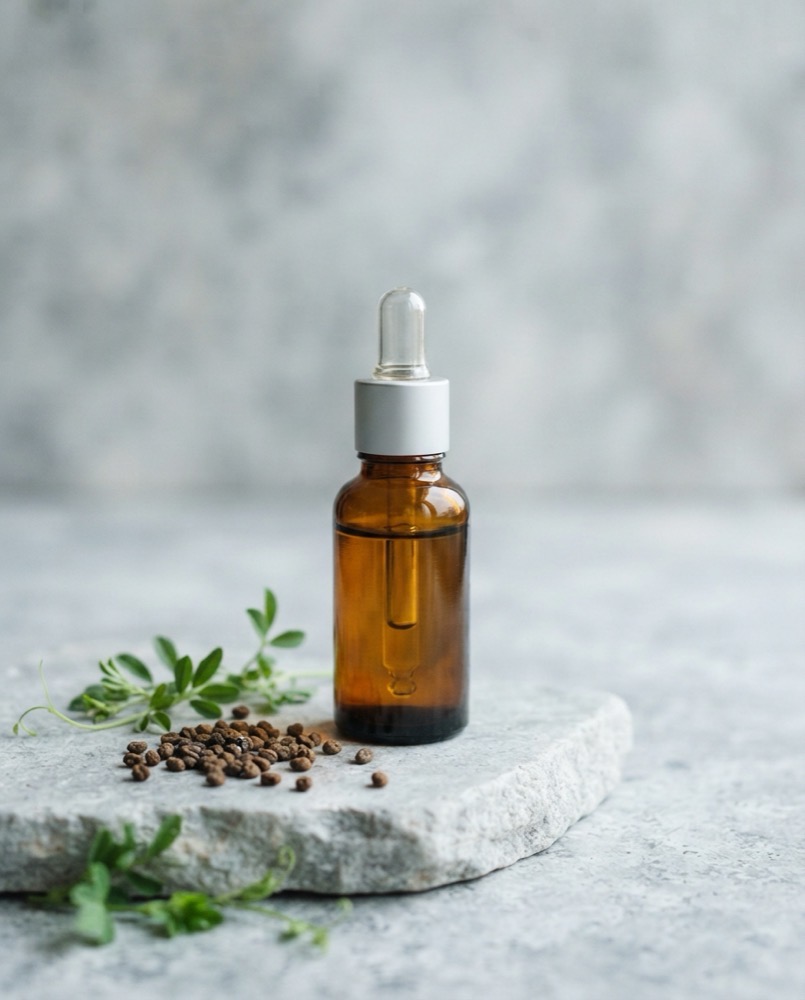
Bakuchiol is a plant-derived compound extracted from the seeds of Psoralea corylifolia, long used in Ayurvedic and traditional Chinese medicine. It is structurally nothing like vitamin A, but gene-expression profiling shows it switches on many of the same pathways as retinol.
That is why it is marketed as a natural retinol alternative. It is stable in light, tolerated in pregnancy far more readily than retinoids, and does not cause the peeling phase.
What skin concerns does bakuchiol treat?
A randomised double-blind trial comparing bakuchiol with retinol found both significantly reduced wrinkle surface area and hyperpigmentation over twelve weeks – with bakuchiol causing less stinging and scaling.
It is therefore a good fit for fine lines, uneven tone, loss of firmness and mild acne, particularly on sensitive or rosacea-prone skin that retinoids inflame.
What ingredients are best paired with bakuchiol?
It is unusually easy to combine. Bakuchiol layers safely with vitamin C, AHAs, BHAs and niacinamide – combinations that would be risky with a retinoid – and is often used alongside a low-strength retinol to boost results.
Pair it with hyaluronic acid, ceramides and peptides for hydration and firmness, and keep using SPF. Expect a slower, gentler curve than retinol rather than an identical one. Take our Skin Quiz.
What are clogged pores?
A clogged pore is a hair follicle blocked by a mix of sebum, dead skin cells and debris. Left open to the air the plug oxidises and darkens into a blackhead; sealed over by skin it becomes a whitehead or closed comedone.
Clogged pores are the starting point of nearly all acne – the microcomedone forms first, and inflammation follows only if bacteria and immune response get involved.
What causes clogged pores?
Excess sebum and abnormal keratinisation are the two mechanics. When the follicle lining sheds cells faster than they can clear, they bind with oil and form a plug.
Comedogenic products (heavy oils, some silicones and waxes), thick makeup worn for long stretches, humidity, sweat left on the skin, hormonal shifts and insufficient cleansing all contribute. So does over-cleansing, which damages the barrier and drives oil production up.
What ingredients are best for clogged pores?
Salicylic acid is the first choice because it is oil-soluble and works inside the pore rather than just on the surface. Glycolic and lactic acid clear the surface layer, and clay masks absorb excess oil weekly.
Retinoids are the most effective long-term fix, because they change how the follicle sheds in the first place. Add niacinamide to regulate sebum and keep the barrier intact, and switch to non-comedogenic, lightweight hydrators. Take our Skin Quiz to find products that will not re-clog you.