What is baking soda in skincare?
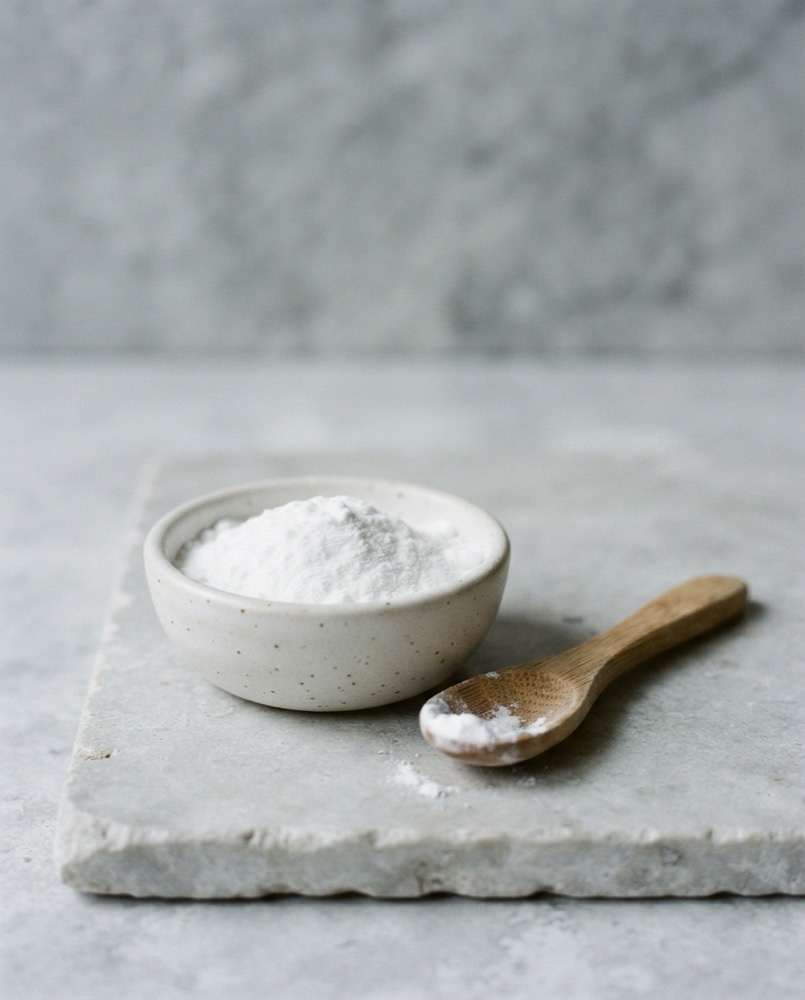
Baking soda is sodium bicarbonate, a fine alkaline powder used in cooking, cleaning and antacids. Its skincare appeal comes from two properties: it is mildly abrasive, and it neutralises acid.
The second is the problem. Baking soda has a pH around 9, while healthy skin sits at roughly pH 4.7 to 5.75. That acidity is not incidental – it keeps barrier-repair enzymes working, holds the microbiome in balance and keeps pathogens out.
What skin concerns does baking soda treat?
It is used in home remedies as a scrub, a spot treatment and an exfoliant, and it does physically slough off surface cells while temporarily absorbing oil.
The cost outweighs it. Applying an alkaline powder strips the acid mantle, and research on cleansing consistently shows alkaline products impair barrier function and slow its recovery. The usual outcome is tightness, redness, rebound oil and more breakouts – the opposite of what it was used for.
What ingredients are best paired with baking soda?
Nothing, on the face. Its one defensible skincare use is neutralising an overly acidic DIY mixture before it touches skin, and even that is a reason to buy a properly formulated product instead.
For gentle exfoliation use lactic acid or a PHA; for oil and congestion use salicylic acid or clay; for blemishes use benzoyl peroxide or azelaic acid. All work with the skin’s pH rather than against it. Take our Skin Quiz.
What are age spots?
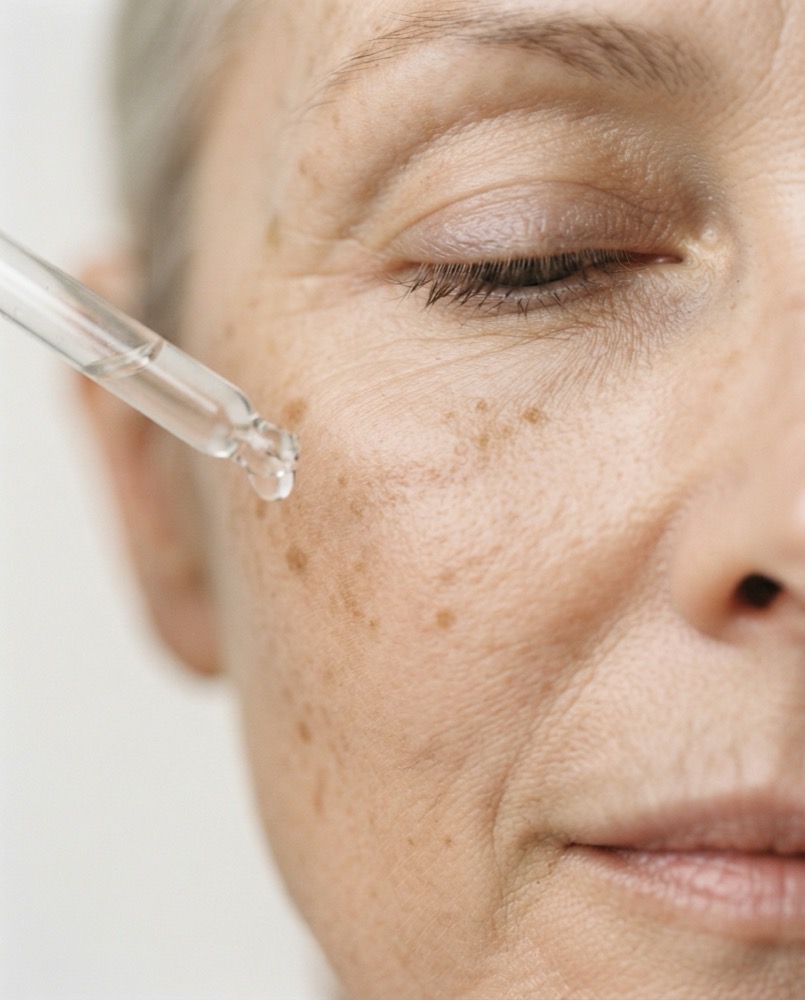
Age spots – known clinically as solar lentigines, and sometimes as liver spots – are flat, well-defined brown or tan patches that appear on skin with the most cumulative sun exposure: the face, backs of the hands, forearms, shoulders and upper chest.
Despite the name, they are not caused by age itself. They are a record of ultraviolet exposure, which is why they are common from the forties onward and why they cluster on areas that rarely get sunscreen.
What causes age spots?
Long-term UV exposure drives melanocytes to over-produce melanin in concentrated spots, and the surrounding keratinocytes stop clearing that pigment efficiently as skin ages.
Fair skin, a history of sunburns, tanning beds and outdoor work all raise the risk. Any new spot that changes shape, colour or size, bleeds or has an irregular border should be checked by a doctor rather than treated cosmetically.
What ingredients are best for age spots?
Topical treatment works but needs patience – expect three to six months. Retinoids speed turnover so pigmented cells shed faster, vitamin C and niacinamide brighten and protect, and alpha arbutin, kojic acid, azelaic acid and liquorice root inhibit new pigment.
Glycolic or lactic acid helps lift existing pigment from the surface. Daily broad-spectrum SPF, including on hands and chest, is what prevents new spots forming. Take our Skin Quiz.