

What is azelaic acid in skincare?
Azelaic acid is a dicarboxylic acid found naturally in grains such as barley, wheat and rye, and produced on the skin by yeast that lives there. Cosmetic products use 10%; prescription strengths are 15% and 20%.
It is unusual among actives in doing several jobs at once – it is antibacterial, anti-inflammatory, mildly keratolytic and a tyrosinase inhibitor – while remaining gentle enough for reactive skin and safe in pregnancy.
What skin concerns does azelaic acid treat?
A systematic review found evidence for azelaic acid across acne, rosacea, melasma and skin ageing – a range few single ingredients cover.
That makes it especially useful where concerns overlap: inflamed breakouts plus the brown marks they leave, or rosacea redness plus uneven tone. Its mechanisms include normalising follicular keratinisation and scavenging reactive oxygen species.
What ingredients are best paired with azelaic acid?
Niacinamide is an excellent partner for redness and sebum control. It also layers well with hyaluronic acid, ceramides and squalane, and can be combined with retinoids or salicylic acid if introduced gradually.
Expect a mild tingle for the first week or two. Because it is one of the few actives considered safe during pregnancy, it is often the substitute of choice when retinoids have to be paused. Take our Skin Quiz.
What are dark spots?
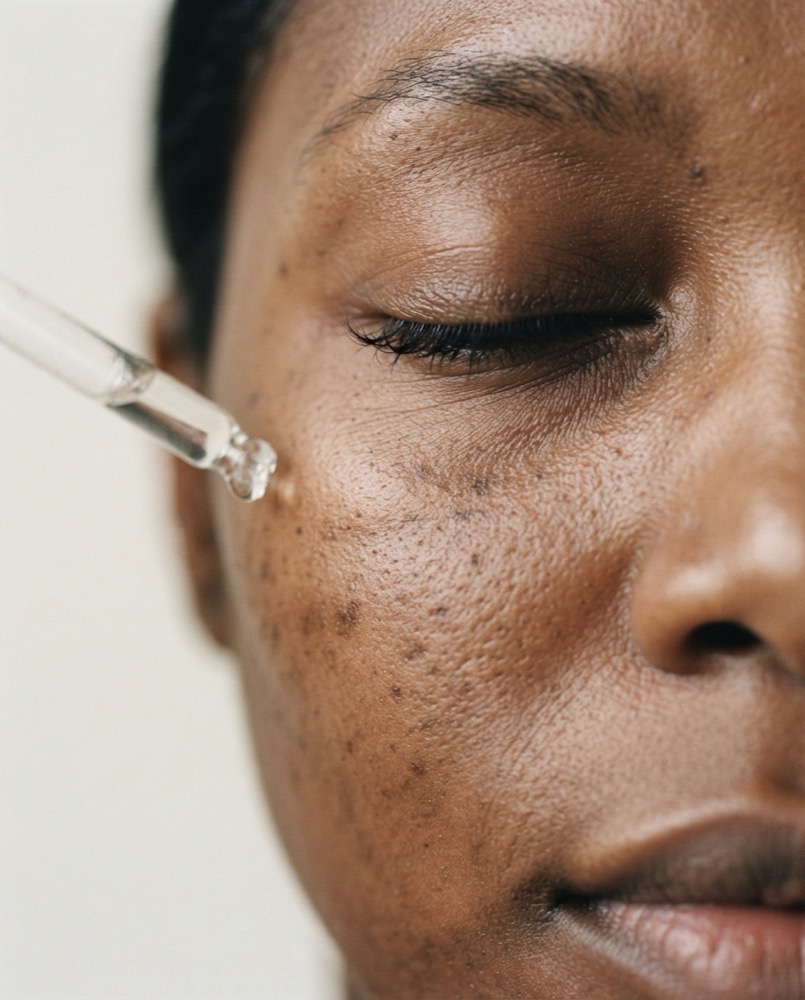
Dark spots are localised patches where the skin has produced more melanin than the surrounding area. The umbrella term covers sun spots, post-acne marks, melasma patches and freckles – different causes, same visible result.
They are flat rather than raised, vary from light tan to deep brown, and are most noticeable on the face, hands and chest. In deeper skin tones they tend to be darker and to last considerably longer.
What causes dark spots?
Two mechanisms dominate. Ultraviolet exposure triggers protective melanin production, and inflammation – from acne, ingrown hairs, eczema, friction, burns or harsh treatments – leaves post-inflammatory hyperpigmentation behind as it heals.
Hormonal change, some medications and heat add to it. Picking at spots is one of the most avoidable causes: the extra inflammation reliably makes the mark darker and longer-lived than the original blemish.
What ingredients are best for dark spots?
Vitamin C, niacinamide and azelaic acid are the everyday workhorses. For stubborn pigment, alpha arbutin, tranexamic acid, kojic acid and liquorice root extract interrupt melanin production directly.
Retinoids and gentle AHAs clear pigmented cells faster from the surface. Give any routine twelve weeks before judging it, and wear broad-spectrum SPF daily or the spots will simply redarken. Take our Skin Quiz.