What is avocado oil in skincare?
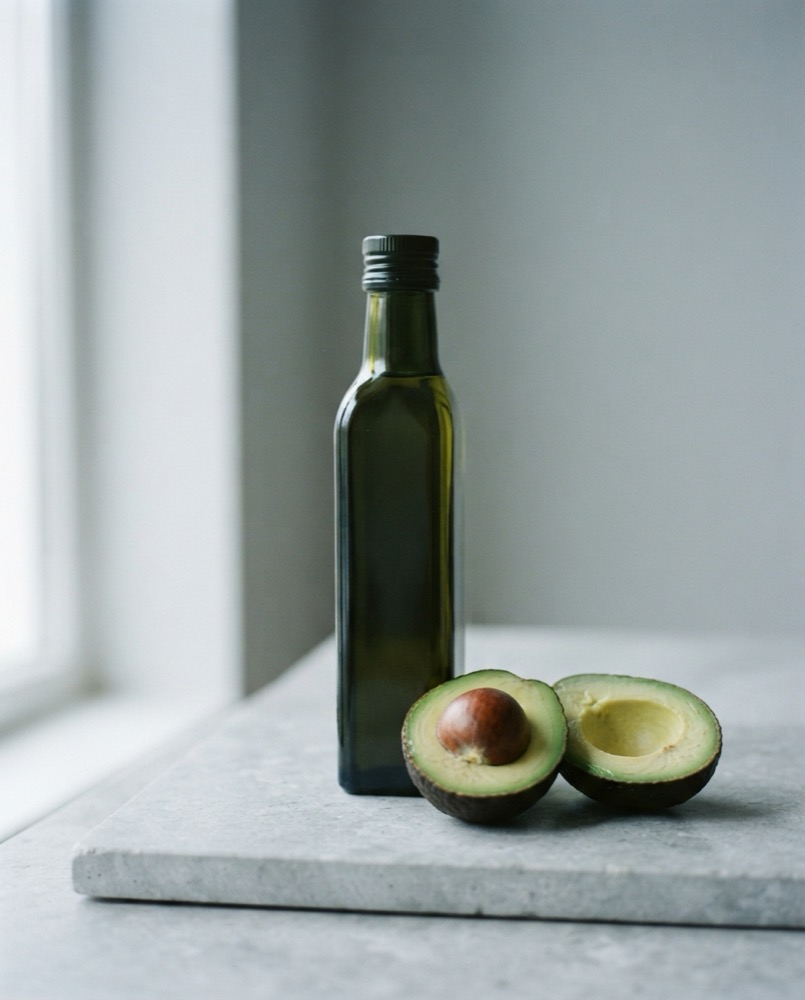
Avocado oil is pressed from the pulp of the fruit rather than the stone, which is unusual – most plant oils come from seeds. It is thick, deep green when unrefined, and very high in oleic acid, with vitamin E, beta-carotene, lecithin and phytosterols.
That composition makes it one of the richest and most occlusive plant oils in common use, closer in feel to a butter than to a light facial oil.
What skin concerns does avocado oil treat?
It suits very dry, flaky or mature skin and rough body areas, where its high lipid content reduces water loss and softens noticeably. Its sterols and vitamin E give it anti-inflammatory activity useful for eczema and psoriasis-prone skin.
It is often used for stretch marks and after sun exposure. Being oleic-dominant and heavy, it is a poor choice for oily or acne-prone facial skin, where it readily congests pores.
What ingredients are best paired with avocado oil?
Use it as a final sealing layer over humectants such as glycerin and hyaluronic acid, and alongside ceramides and shea butter for intensive dry-skin routines.
It is also a good carrier for vitamin C oils and essential oils. If your skin is combination or breakout-prone, reserve it for body and hands, and use squalane or jojoba on the face. Take our Skin Quiz.
What are sun spots?
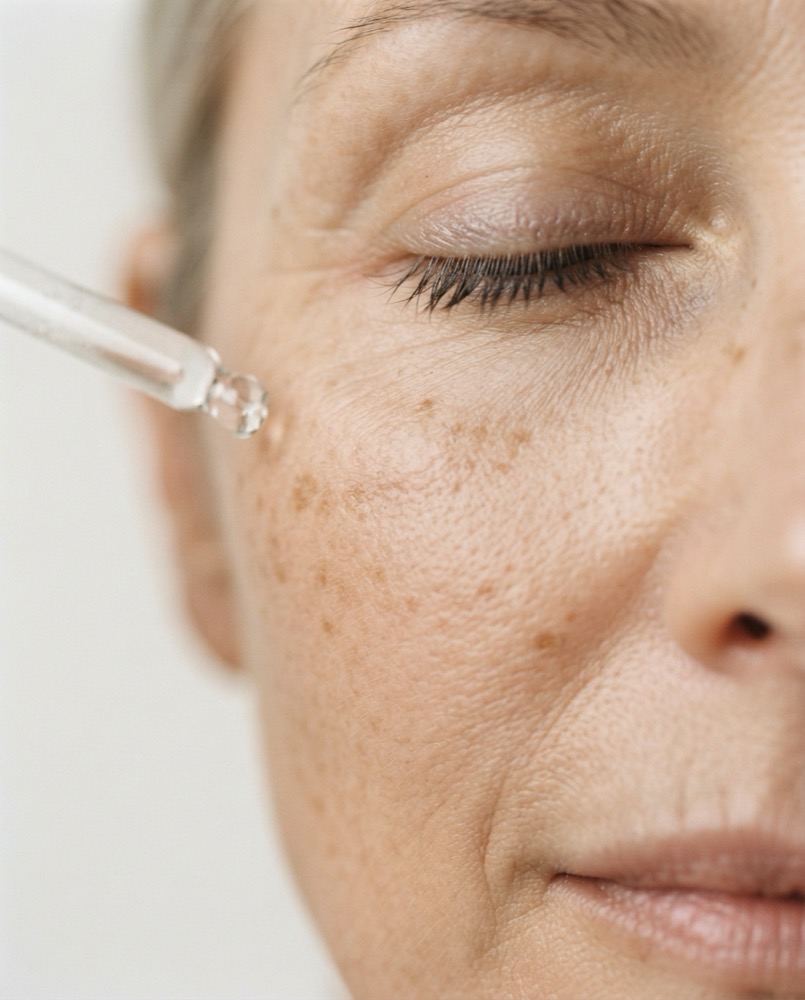
Sun spots are flat patches of concentrated pigment that form where skin has taken the most ultraviolet exposure – cheeks, nose, forehead, hands, shoulders and chest. Dermatologists call them solar lentigines; they are the same thing as age spots.
They are harmless, but they are a visible marker of accumulated photodamage, and they usually arrive alongside other signs of it: fine lines, loss of firmness and an uneven overall tone.
What causes sun spots?
UV radiation prompts melanocytes to produce extra melanin as a defence. With repeated exposure that response becomes localised and fixed, leaving discrete patches instead of an even tan that fades.
Tanning beds, sunburns in childhood, fair skin and outdoor time without protection all increase the count. Incidental exposure – driving, walking, sitting near a window – adds up more than most people expect.
What ingredients are best for sun spots?
Retinoids to accelerate turnover, vitamin C to protect and brighten, and pigment inhibitors such as alpha arbutin, kojic acid, azelaic acid, tranexamic acid and liquorice root are the core toolkit.
Gentle AHAs help shift surface pigment, and niacinamide slows the transfer of melanin into skin cells. None of it holds without daily broad-spectrum SPF and reapplication. Take our Skin Quiz.