What is argan oil in skincare?
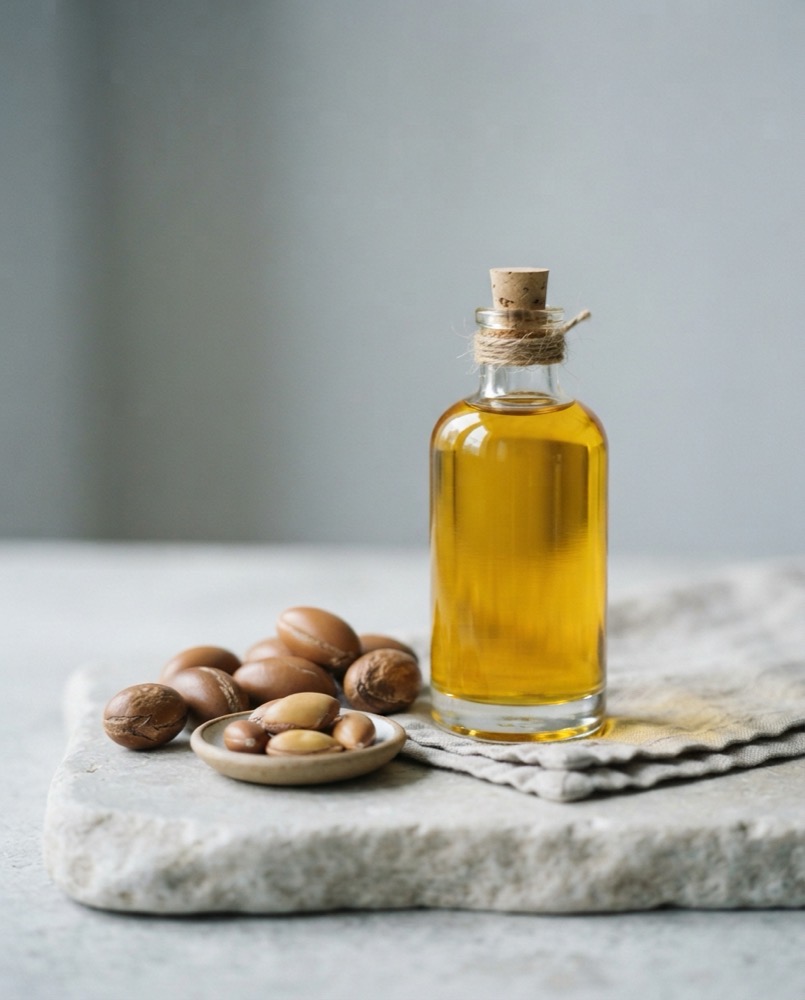
Argan oil is pressed from the kernels of the argan tree, which grows almost exclusively in southwestern Morocco. Cosmetic-grade oil comes from unroasted kernels, which is why it has a far milder scent than the culinary version.
It is roughly 80% unsaturated fatty acids – mainly oleic and linoleic – with a high content of vitamin E and polyphenols. Reviews of its medical and cosmetic uses cover antioxidant, anti-inflammatory and emollient activity.
What skin concerns does argan oil treat?
It is primarily a moisturiser and barrier support for dry, dehydrated or mature skin, and its linoleic acid content helps calm inflammation in eczema-prone and reactive skin.
A controlled study in postmenopausal women found daily topical argan oil significantly improved skin elasticity over twelve weeks, with dietary intake adding further benefit. It is also widely used on hair, nails and stretch marks.
What ingredients are best paired with argan oil?
Apply it over a humectant – hyaluronic acid or glycerin – so it seals moisture in rather than sitting on dry skin. It complements ceramides, squalane and shea butter for barrier repair.
Its vitamin E content makes it a natural partner for vitamin C serums, and it buffers retinoid dryness well. It sits at the moderate end of comedogenicity, so oily and very acne-prone skin may prefer jojoba or squalane instead. Take our Skin Quiz.
What is oily skin?
Oily skin is a skin type in which the sebaceous glands produce more sebum than the skin needs. It shows up as shine through the T-zone within hours of cleansing, visibly enlarged pores, makeup that slides or separates, and a tendency towards blackheads and congestion.
Sebum itself is not the enemy – it carries vitamin E to the surface, keeps the barrier supple and helps oily skin hold its structure, which is why it often shows fine lines later than dry skin does.
What causes oily skin?
Genetics and androgen activity are the primary drivers of how much sebum your glands produce. Heat and humidity increase output measurably, and hormonal fluctuations across the monthly cycle, pregnancy or puberty shift it again.
Stress, a diet heavy in refined carbohydrates, and – counter-intuitively – over-cleansing with stripping foams or alcohol-based toners all push oil production up, because skin compensates for a damaged barrier by making more.
What ingredients are best for oily skin?
Look for salicylic acid (a BHA that is oil-soluble, so it clears inside the pore), niacinamide and zinc to regulate sebum, clay such as bentonite or kaolin for weekly absorption, and retinoids or azelaic acid to normalise how pores shed.
Do not skip hydration: lightweight humectants like hyaluronic acid and glycerin, plus non-comedogenic squalane or jojoba oil, keep the barrier intact so the skin stops over-compensating. Skip heavy occlusive balms and high-alcohol toners. Take our Skin Quiz to get the balance right for your skin.