

What are antioxidants in skincare?
Antioxidants are molecules that neutralise free radicals – unstable oxygen species generated by UV light, pollution, smoke and normal metabolism. Left unchecked those radicals damage lipids, proteins and DNA in skin cells.
Skin has its own antioxidant network, but it is depleted by sun exposure and declines with age. Topical antioxidants top it back up. The category spans vitamin C, vitamin E, ferulic acid, niacinamide, resveratrol, green tea polyphenols, coenzyme Q10 and many botanical extracts.
What skin concerns do antioxidants treat?
They are primarily preventative, working against the oxidative damage behind photoageing – fine lines, loss of firmness, uneven tone and dullness.
Several also treat actively: vitamin C brightens pigment, niacinamide evens tone and controls oil, green tea and resveratrol calm inflammation. Applied under sunscreen they reduce the damage that gets through, which is why dermatologists treat them as a morning step rather than an optional extra.
What ingredients are best paired with antioxidants?
Antioxidants work as a network, regenerating one another, so combinations outperform any single one. The best-evidenced example is vitamin C with vitamin E and ferulic acid, which together measurably increase photoprotection beyond what each achieves alone.
Use them in the morning, always under broad-spectrum SPF – they reduce damage but do not block UV. At night, pair with retinoids and peptides for repair, and with ceramides and hyaluronic acid for barrier support. Take our Skin Quiz.
What are sun spots?
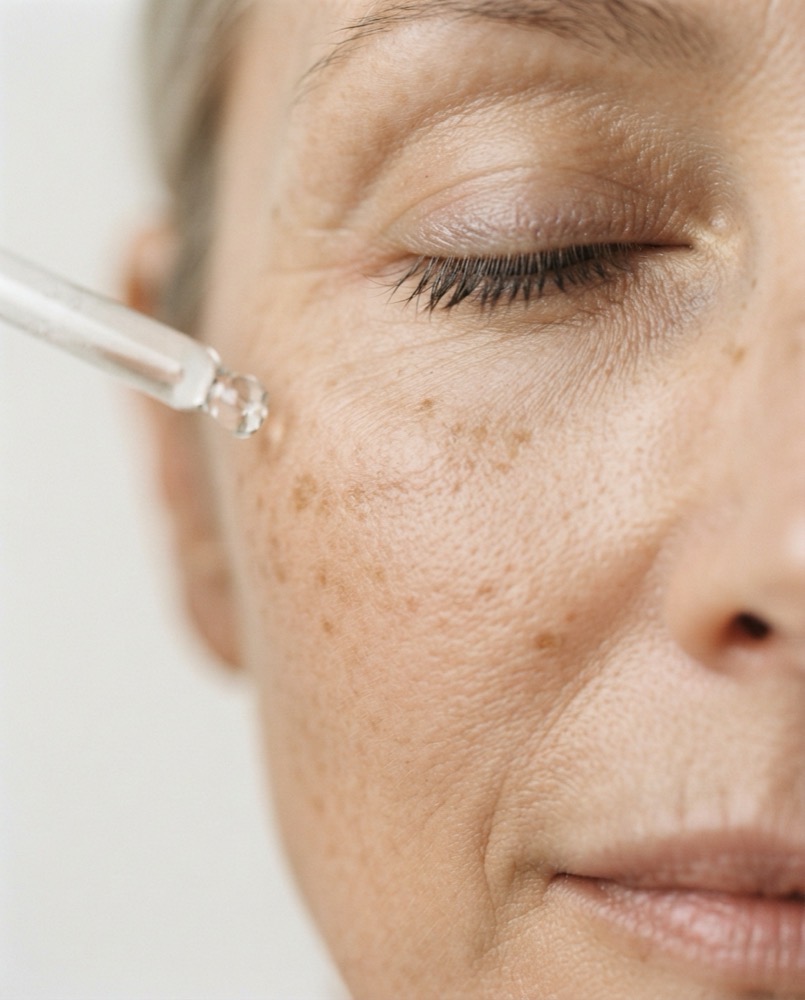
Sun spots are flat patches of concentrated pigment that form where skin has taken the most ultraviolet exposure – cheeks, nose, forehead, hands, shoulders and chest. Dermatologists call them solar lentigines; they are the same thing as age spots.
They are harmless, but they are a visible marker of accumulated photodamage, and they usually arrive alongside other signs of it: fine lines, loss of firmness and an uneven overall tone.
What causes sun spots?
UV radiation prompts melanocytes to produce extra melanin as a defence. With repeated exposure that response becomes localised and fixed, leaving discrete patches instead of an even tan that fades.
Tanning beds, sunburns in childhood, fair skin and outdoor time without protection all increase the count. Incidental exposure – driving, walking, sitting near a window – adds up more than most people expect.
What ingredients are best for sun spots?
Retinoids to accelerate turnover, vitamin C to protect and brighten, and pigment inhibitors such as alpha arbutin, kojic acid, azelaic acid, tranexamic acid and liquorice root are the core toolkit.
Gentle AHAs help shift surface pigment, and niacinamide slows the transfer of melanin into skin cells. None of it holds without daily broad-spectrum SPF and reapplication. Take our Skin Quiz.