What is aloe vera in skincare?
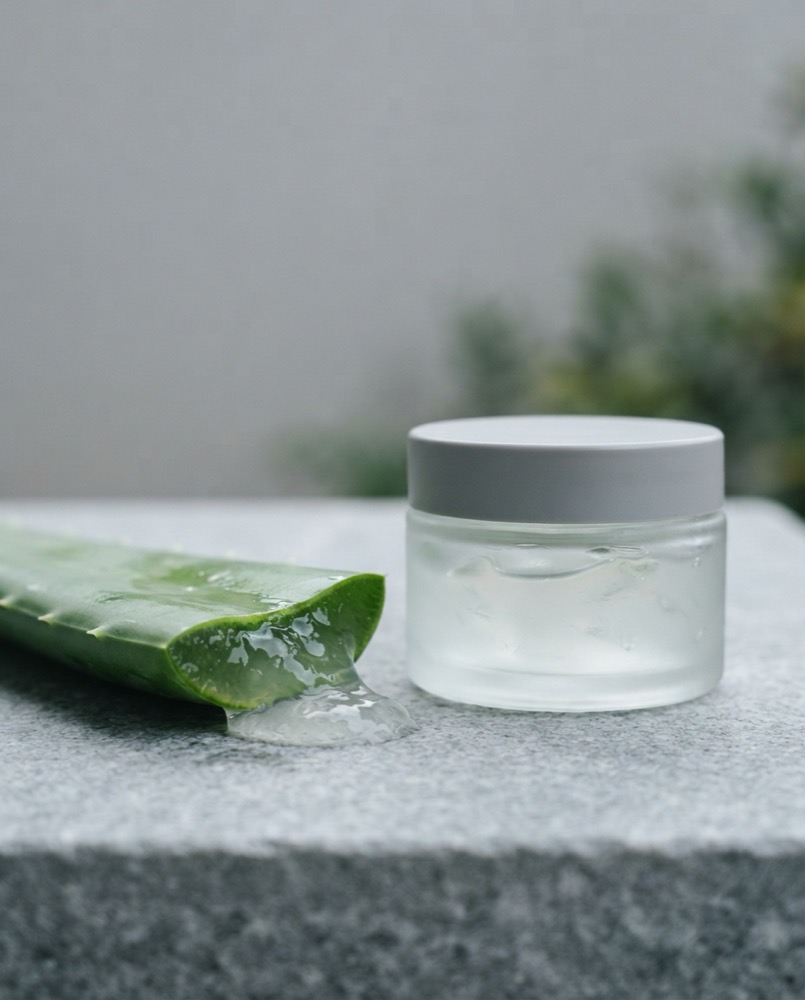
Aloe vera is a succulent whose leaves hold a clear inner gel made up of around 99% water plus polysaccharides, amino acids, vitamins, enzymes and salicylates. That gel is what goes into skincare.
It has been used medicinally for thousands of years, and it remains one of the few traditional botanicals with a reasonable modern evidence base – particularly for wound healing and skin repair.
What skin concerns does aloe vera treat?
It is best known for soothing sunburn, minor burns, cuts and irritation, where its anti-inflammatory and cooling action gives immediate relief. Its polysaccharides act as humectants, so it also hydrates without any greasiness.
Studies support a role in accelerating cutaneous wound healing, and its mild antibacterial activity makes it a useful gentle option for inflamed, acne-prone skin that cannot tolerate stronger actives.
What ingredients are best paired with aloe vera?
It works as a lightweight hydrating base under almost anything: pair it with hyaluronic acid and glycerin for hydration, ceramides and squalane to seal it in, and niacinamide or centella asiatica for extra calming.
Because aloe is mostly water, it needs a moisturiser over the top or the hydration evaporates. A small number of people are allergic, so patch test first – and choose a formula high in aloe rather than one where it sits near the end of the list. Take our Skin Quiz.
What are wrinkles?
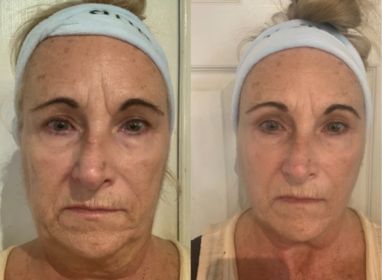
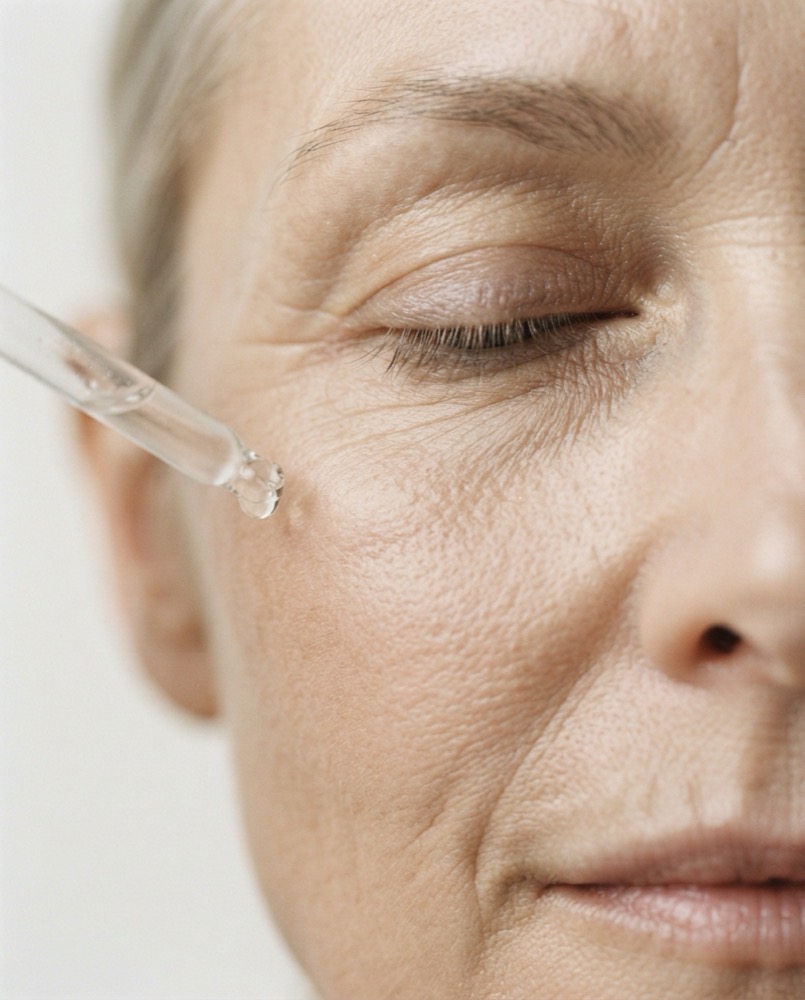
Wrinkles are permanent folds and creases in the skin. They begin as dynamic lines that appear only with expression, then set into static lines visible at rest once the underlying support structure can no longer push them back out.
They form first where skin is thin and movement is constant: crow’s feet, forehead lines, frown lines between the brows, and nasolabial folds. Deeper folds also reflect loss of fat and bone volume, not just skin change.
What causes wrinkles?
Internally, collagen and elastin production declines steadily from the mid-twenties and the dermal matrix thins, so skin loses the scaffolding that keeps it smooth.
Externally, ultraviolet radiation does most of the damage – it activates enzymes that break down collagen and degrades elastic fibres. Smoking, pollution, sugar-driven glycation, poor sleep, sleeping position and repeated facial movement all accelerate the process.
What ingredients are best for wrinkles?
Retinoids have the deepest evidence base for stimulating collagen and measurably reducing wrinkle depth over six to twelve months. Vitamin C supports synthesis while neutralising the free radicals that break it down, and peptides signal repair.
Round it out with hyaluronic acid and ceramides for hydration and barrier strength, niacinamide for elasticity and tone, and AHAs for surface renewal. Daily broad-spectrum SPF is the most effective anti-wrinkle product there is. Take our Skin Quiz.