What is aloe vera in skincare?
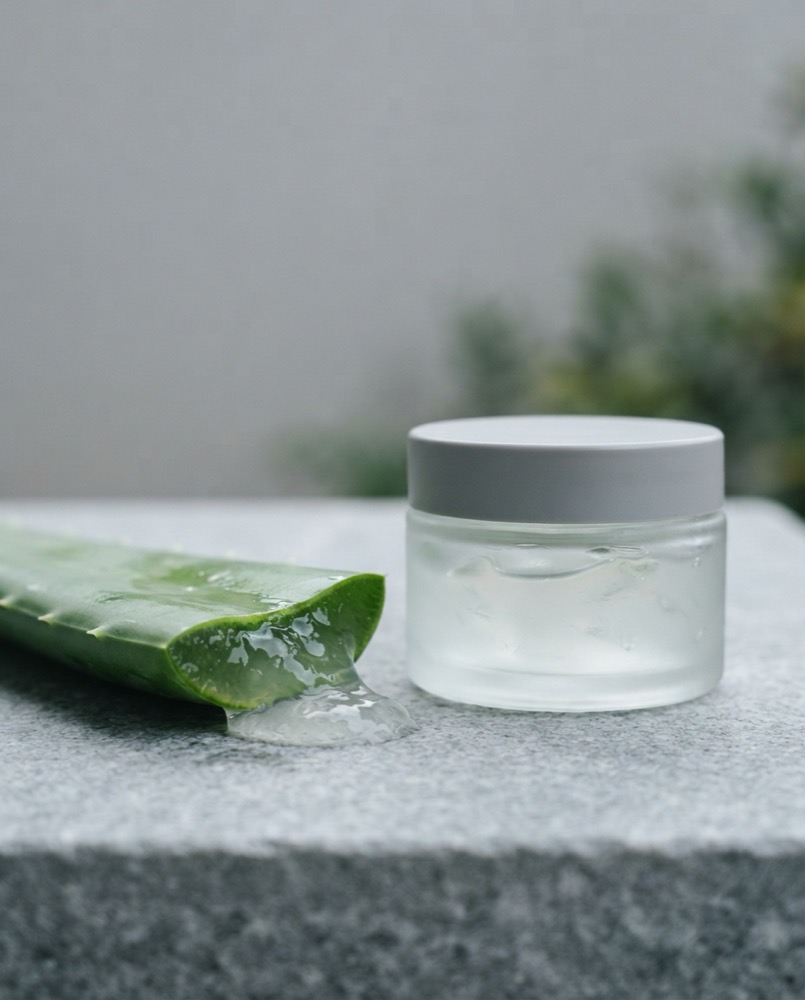
Aloe vera is a succulent whose leaves hold a clear inner gel made up of around 99% water plus polysaccharides, amino acids, vitamins, enzymes and salicylates. That gel is what goes into skincare.
It has been used medicinally for thousands of years, and it remains one of the few traditional botanicals with a reasonable modern evidence base – particularly for wound healing and skin repair.
What skin concerns does aloe vera treat?
It is best known for soothing sunburn, minor burns, cuts and irritation, where its anti-inflammatory and cooling action gives immediate relief. Its polysaccharides act as humectants, so it also hydrates without any greasiness.
Studies support a role in accelerating cutaneous wound healing, and its mild antibacterial activity makes it a useful gentle option for inflamed, acne-prone skin that cannot tolerate stronger actives.
What ingredients are best paired with aloe vera?
It works as a lightweight hydrating base under almost anything: pair it with hyaluronic acid and glycerin for hydration, ceramides and squalane to seal it in, and niacinamide or centella asiatica for extra calming.
Because aloe is mostly water, it needs a moisturiser over the top or the hydration evaporates. A small number of people are allergic, so patch test first – and choose a formula high in aloe rather than one where it sits near the end of the list. Take our Skin Quiz.
What is dullness?
Healthy skin reflects light evenly, which is what reads as bright and glowing. Dull skin does the opposite – it looks flat, ashy, grey or sallow, and makeup tends to sit on top of it rather than blend in.
Dullness is not a condition in itself but a visible symptom: a build-up of dead cells, dehydration and reduced microcirculation that together stop light bouncing cleanly off the skin’s surface.
What causes dull skin?
Dead skin cells that do not shed naturally accumulate on the surface and scatter light unevenly. Dehydration flattens those cells so they no longer sit plump against one another, and overly dry skin can damage the follicles and slow the production of collagen and sebum – all of which make the complexion look duller or ashier.
Lifestyle and environment do the rest. Sun exposure, pollution, smoking, alcohol, broken sleep and stress all accelerate free-radical damage, while cell turnover naturally slows with age, so skin loses the reflectivity it had in your twenties.
What ingredients are best for dullness?
Brightening dull skin comes down to three things: gentle exfoliation, consistent hydration and antioxidant protection. Vitamin C, alpha-hydroxy acids such as glycolic and lactic acid, salicylic acid, retinol and vitamin A, niacinamide, green tea extract, coenzyme Q10 and rosehip oil all help resurface, even out tone and defend against free radicals.
Hyaluronic acid and hydrolysed collagen plump the skin so it reflects more light, and daily broad-spectrum sunscreen prevents the UV damage that dulls the complexion in the first place. Take our Skin Quiz to find the exact combination your skin needs.