

What is aloe vera in skincare?
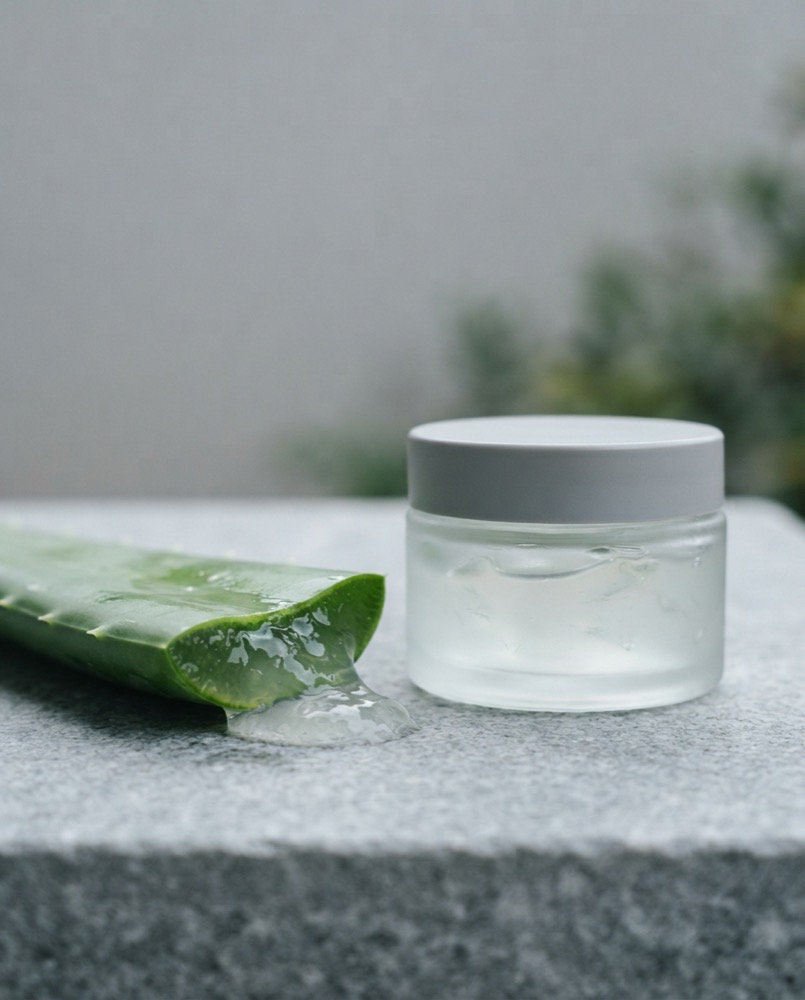
Aloe vera is a succulent whose leaves hold a clear inner gel made up of around 99% water plus polysaccharides, amino acids, vitamins, enzymes and salicylates. That gel is what goes into skincare.
It has been used medicinally for thousands of years, and it remains one of the few traditional botanicals with a reasonable modern evidence base – particularly for wound healing and skin repair.
What skin concerns does aloe vera treat?
It is best known for soothing sunburn, minor burns, cuts and irritation, where its anti-inflammatory and cooling action gives immediate relief. Its polysaccharides act as humectants, so it also hydrates without any greasiness.
Studies support a role in accelerating cutaneous wound healing, and its mild antibacterial activity makes it a useful gentle option for inflamed, acne-prone skin that cannot tolerate stronger actives.
What ingredients are best paired with aloe vera?
It works as a lightweight hydrating base under almost anything: pair it with hyaluronic acid and glycerin for hydration, ceramides and squalane to seal it in, and niacinamide or centella asiatica for extra calming.
Because aloe is mostly water, it needs a moisturiser over the top or the hydration evaporates. A small number of people are allergic, so patch test first – and choose a formula high in aloe rather than one where it sits near the end of the list. Take our Skin Quiz.
What are dark spots?
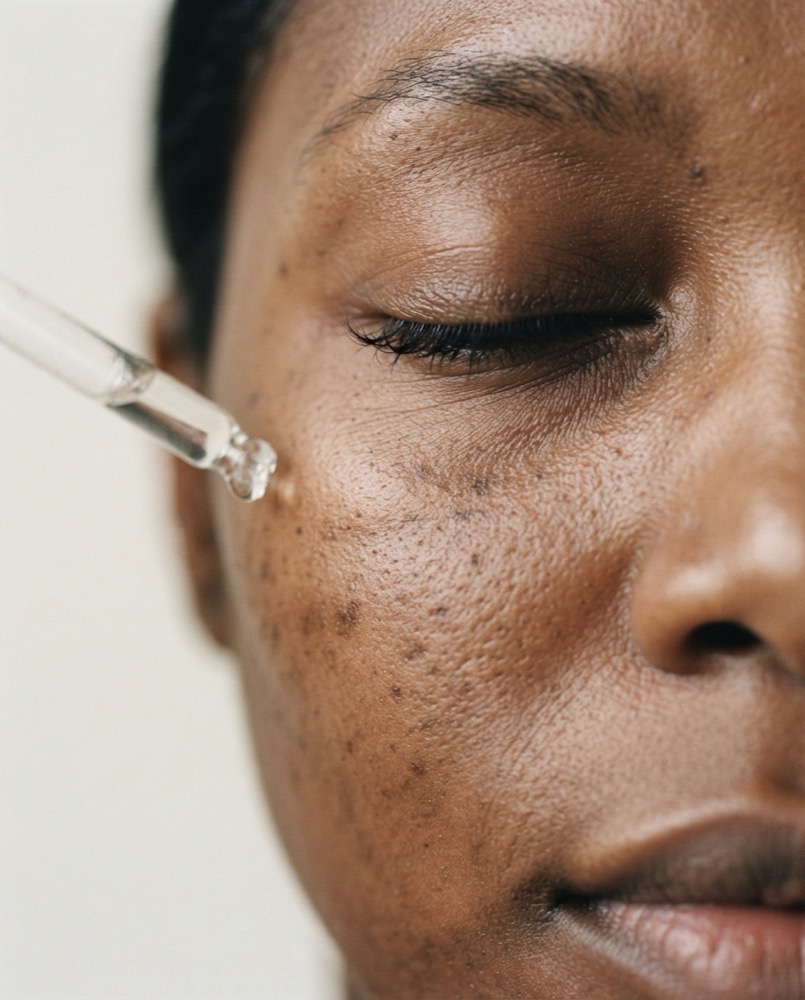
Dark spots are localised patches where the skin has produced more melanin than the surrounding area. The umbrella term covers sun spots, post-acne marks, melasma patches and freckles – different causes, same visible result.
They are flat rather than raised, vary from light tan to deep brown, and are most noticeable on the face, hands and chest. In deeper skin tones they tend to be darker and to last considerably longer.
What causes dark spots?
Two mechanisms dominate. Ultraviolet exposure triggers protective melanin production, and inflammation – from acne, ingrown hairs, eczema, friction, burns or harsh treatments – leaves post-inflammatory hyperpigmentation behind as it heals.
Hormonal change, some medications and heat add to it. Picking at spots is one of the most avoidable causes: the extra inflammation reliably makes the mark darker and longer-lived than the original blemish.
What ingredients are best for dark spots?
Vitamin C, niacinamide and azelaic acid are the everyday workhorses. For stubborn pigment, alpha arbutin, tranexamic acid, kojic acid and liquorice root extract interrupt melanin production directly.
Retinoids and gentle AHAs clear pigmented cells faster from the surface. Give any routine twelve weeks before judging it, and wear broad-spectrum SPF daily or the spots will simply redarken. Take our Skin Quiz.