


What are AHAs in skincare?
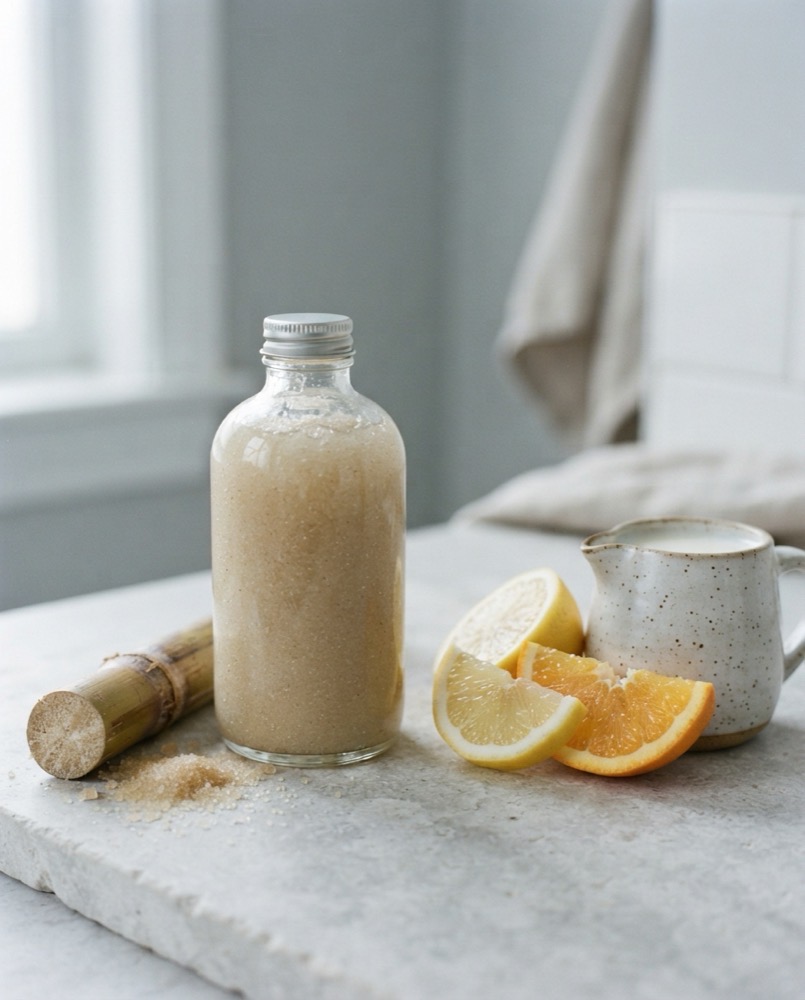
AHAs – alpha-hydroxy acids – are a family of water-soluble acids derived mostly from fruit, milk and sugar. The group includes glycolic acid (sugar cane), lactic acid (milk), mandelic acid (almonds), malic acid (apples) and citric acid.
They work on the surface of the skin, dissolving the bonds that hold dead cells together so the skin sheds evenly. Molecule size decides strength and tolerance: glycolic is the smallest and most potent, mandelic the largest and gentlest.
What skin concerns do AHAs treat?
AHAs are the first choice for dullness, rough or flaky texture, uneven tone, sun spots, post-acne marks and fine lines. Because they are water-soluble they suit normal to dry skin particularly well.
Beyond exfoliation, sustained use improves hydration, thickens the living epidermis and stimulates collagen, so the change is more than superficial.
What ingredients are best paired with AHAs?
Rebuild after exfoliating: hyaluronic acid, glycerin, ceramides, panthenol and squalane restore what acids strip. Niacinamide supports tone and barrier repair alongside them.
Keep AHAs away from retinoids, BHAs and benzoyl peroxide within the same routine step unless your skin is well conditioned, and start at two or three nights a week. AHAs raise UV sensitivity, so daily broad-spectrum SPF is required. Take our Skin Quiz.
What are dark spots?
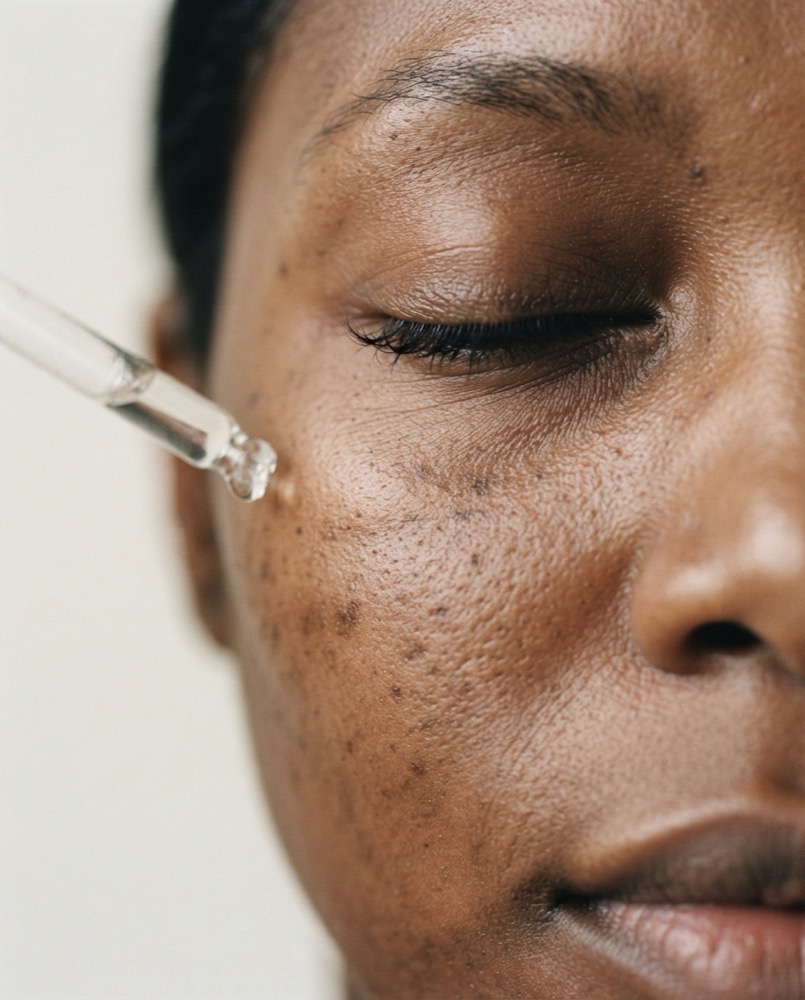
Dark spots are localised patches where the skin has produced more melanin than the surrounding area. The umbrella term covers sun spots, post-acne marks, melasma patches and freckles – different causes, same visible result.
They are flat rather than raised, vary from light tan to deep brown, and are most noticeable on the face, hands and chest. In deeper skin tones they tend to be darker and to last considerably longer.
What causes dark spots?
Two mechanisms dominate. Ultraviolet exposure triggers protective melanin production, and inflammation – from acne, ingrown hairs, eczema, friction, burns or harsh treatments – leaves post-inflammatory hyperpigmentation behind as it heals.
Hormonal change, some medications and heat add to it. Picking at spots is one of the most avoidable causes: the extra inflammation reliably makes the mark darker and longer-lived than the original blemish.
What ingredients are best for dark spots?
Vitamin C, niacinamide and azelaic acid are the everyday workhorses. For stubborn pigment, alpha arbutin, tranexamic acid, kojic acid and liquorice root extract interrupt melanin production directly.
Retinoids and gentle AHAs clear pigmented cells faster from the surface. Give any routine twelve weeks before judging it, and wear broad-spectrum SPF daily or the spots will simply redarken. Take our Skin Quiz.