

What are adaptogens in skincare?
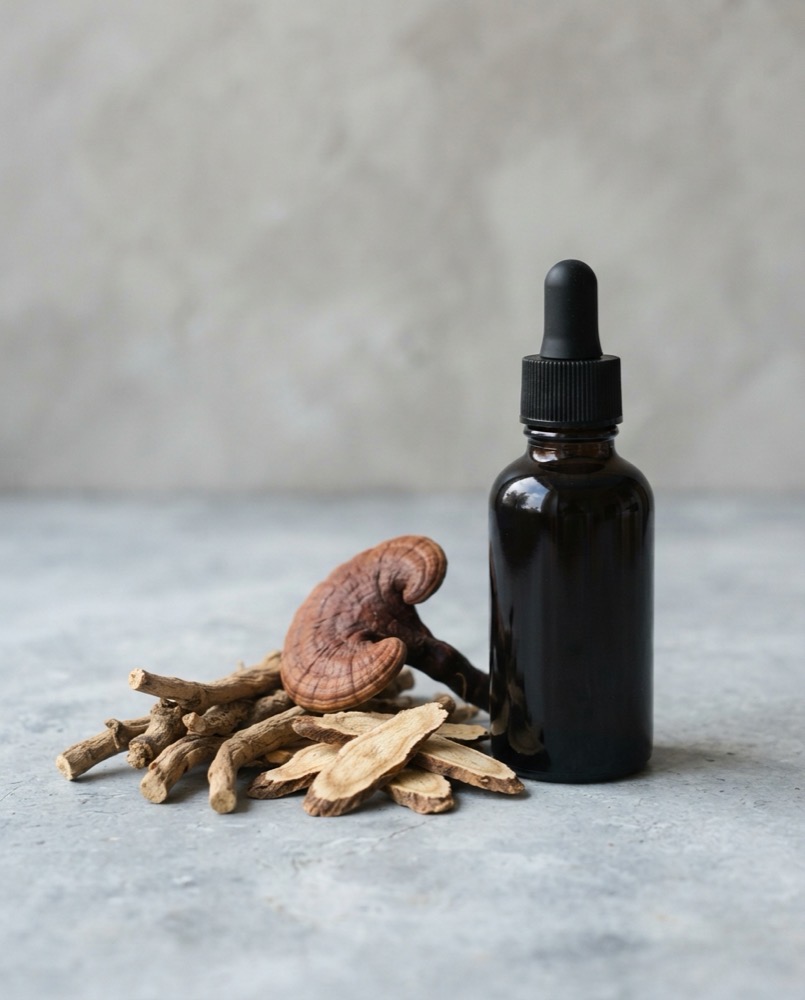
Adaptogens are plants traditionally used to help the body cope with stress – ashwagandha, ginseng, rhodiola, reishi and other medicinal mushrooms, holy basil, schisandra. The term comes from herbal medicine rather than dermatology.
The rationale for putting them in skincare rests on the link between stress and skin: cortisol drives inflammation, impairs the barrier and worsens acne, eczema and psoriasis. Reviews of adaptogen mechanisms describe effects on stress-response pathways at the cellular level.
What skin concerns do adaptogens treat?
Most adaptogens are also potent antioxidants and anti-inflammatories, which is where their topical benefit is clearest – calming redness, defending against free-radical damage, and supporting a barrier that stress has compromised.
The evidence is stronger for oral than topical use: randomised placebo-controlled work on ashwagandha shows measurable reductions in cortisol and stress. Applied to skin, treat them as a good antioxidant and soothing layer rather than a stress cure.
What ingredients are best paired with adaptogens?
They complement other antioxidants – vitamin C, vitamin E, niacinamide, green tea – and sit well alongside ceramides, hyaluronic acid and centella asiatica for barrier and calming work.
If stress is genuinely driving your skin, the routine is only part of the answer: sleep, exercise and the underlying stressor do more than any cream. Speak to a doctor before taking adaptogens orally, particularly with thyroid or autoimmune conditions or in pregnancy. Take our Skin Quiz.
What are wrinkles?
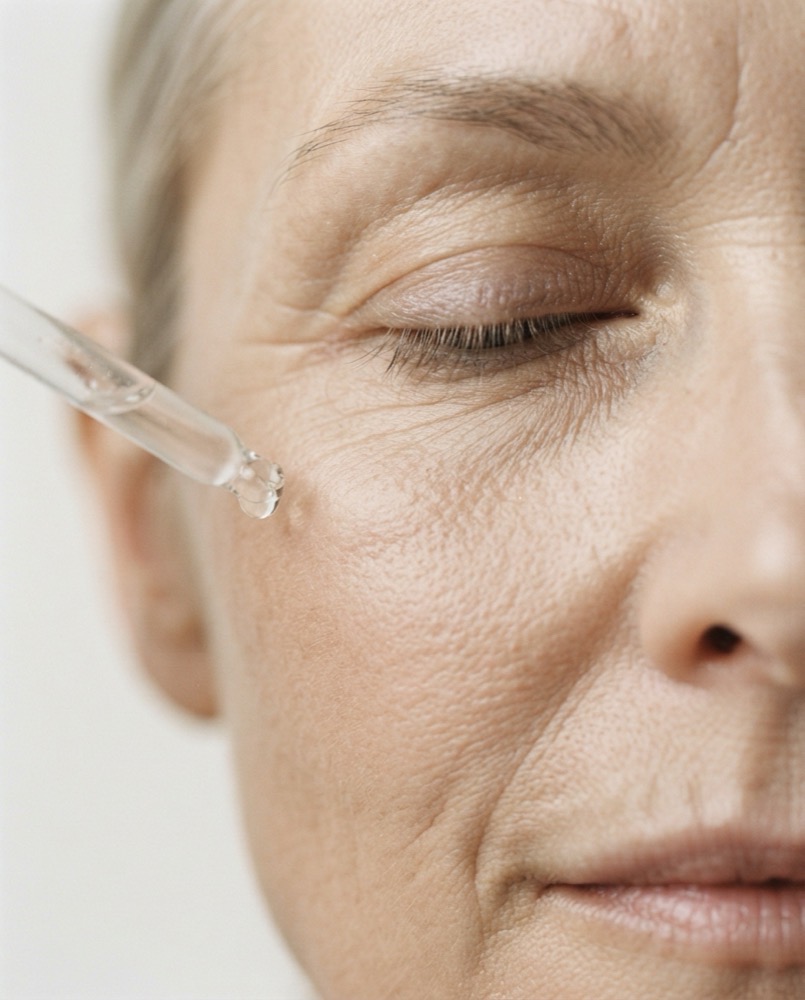
Wrinkles are permanent folds and creases in the skin. They begin as dynamic lines that appear only with expression, then set into static lines visible at rest once the underlying support structure can no longer push them back out.
They form first where skin is thin and movement is constant: crow’s feet, forehead lines, frown lines between the brows, and nasolabial folds. Deeper folds also reflect loss of fat and bone volume, not just skin change.
What causes wrinkles?
Internally, collagen and elastin production declines steadily from the mid-twenties and the dermal matrix thins, so skin loses the scaffolding that keeps it smooth.
Externally, ultraviolet radiation does most of the damage – it activates enzymes that break down collagen and degrades elastic fibres. Smoking, pollution, sugar-driven glycation, poor sleep, sleeping position and repeated facial movement all accelerate the process.
What ingredients are best for wrinkles?
Retinoids have the deepest evidence base for stimulating collagen and measurably reducing wrinkle depth over six to twelve months. Vitamin C supports synthesis while neutralising the free radicals that break it down, and peptides signal repair.
Round it out with hyaluronic acid and ceramides for hydration and barrier strength, niacinamide for elasticity and tone, and AHAs for surface renewal. Daily broad-spectrum SPF is the most effective anti-wrinkle product there is. Take our Skin Quiz.