What is hydroxyacetophenone in skincare?
Hydroxyacetophenone – usually 4-hydroxyacetophenone on a label – is a phenolic compound used mainly as an antioxidant and a preservative booster. It has little antimicrobial power on its own, but it makes preservatives like phenoxyethanol work harder, so formulators can use less of them.
It also stabilises the formula itself, slowing the oxidation that turns oils rancid and degrades delicate actives. That combination is why it turns up in so many otherwise minimal ingredient lists.
What skin concerns does hydroxyacetophenone treat?
It is chiefly a formulation ingredient rather than a treatment, but it is not inert. As an antioxidant it contributes to the free-radical defence of a product, and it has documented soothing activity on irritated skin.
More interestingly, laboratory work shows 4-hydroxyacetophenone acts as an antipigmentation agent by inhibiting tyrosinase, the key enzyme in melanin production – a secondary benefit for uneven tone, though not a reason to buy a product on its own.
What ingredients are best paired with hydroxyacetophenone?
It is almost always formulated with phenoxyethanol, caprylyl glycol or ethylhexylglycerin, whose preservative effect it amplifies.
It is well tolerated by most people, though allergic contact dermatitis has been reported in isolated cases, including a photo-aggravated reaction to it in a sunscreen. If you get unexplained reactions to products that share few other ingredients, it is worth noting as a candidate for patch testing. Take our Skin Quiz.
What are clogged pores?
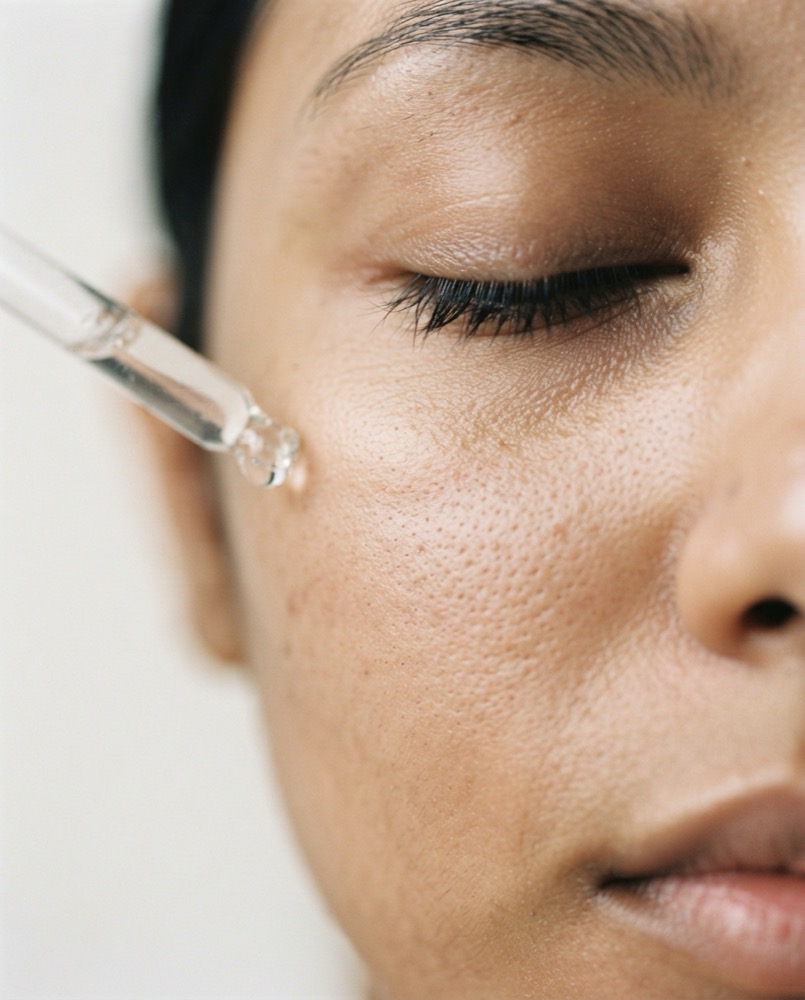
A clogged pore is a hair follicle blocked by a mix of sebum, dead skin cells and debris. Left open to the air the plug oxidises and darkens into a blackhead; sealed over by skin it becomes a whitehead or closed comedone.
Clogged pores are the starting point of nearly all acne – the microcomedone forms first, and inflammation follows only if bacteria and immune response get involved.
What causes clogged pores?
Excess sebum and abnormal keratinisation are the two mechanics. When the follicle lining sheds cells faster than they can clear, they bind with oil and form a plug.
Comedogenic products (heavy oils, some silicones and waxes), thick makeup worn for long stretches, humidity, sweat left on the skin, hormonal shifts and insufficient cleansing all contribute. So does over-cleansing, which damages the barrier and drives oil production up.
What ingredients are best for clogged pores?
Salicylic acid is the first choice because it is oil-soluble and works inside the pore rather than just on the surface. Glycolic and lactic acid clear the surface layer, and clay masks absorb excess oil weekly.
Retinoids are the most effective long-term fix, because they change how the follicle sheds in the first place. Add niacinamide to regulate sebum and keep the barrier intact, and switch to non-comedogenic, lightweight hydrators. Take our Skin Quiz to find products that will not re-clog you.