

What is ethylhexyl palmitate in skincare?
Ethylhexyl palmitate, sometimes listed as octyl palmitate, is an ester of 2-ethylhexyl alcohol and palmitic acid. It is a clear, very light liquid used as an emollient, a solvent and a texture agent.
It is particularly common in sunscreens and makeup, where it dissolves UV filters and pigments and gives them an elegant, dry-touch finish. It is also used to replace mineral oil in formulations aiming for a lighter skin feel.
What skin concerns does ethylhexyl palmitate treat?
It softens the skin surface and slows water loss, giving a smooth, conditioned finish without greasiness. Its main role, though, is making other things work – keeping sunscreen filters evenly dispersed so the stated SPF is actually delivered.
Like its close relative isopropyl palmitate it scores poorly on comedogenicity testing. For acne-prone skin, a sunscreen or foundation built around it is a plausible cause of persistent small congestion around the cheeks and forehead.
What ingredients are best paired with ethylhexyl palmitate?
In dry or normal skin it sits well with ceramides, glycerin, squalane and shea butter, adding slip without weight.
If you are breakout-prone, look for sunscreens and bases that use squalane, caprylic/capric triglyceride or silicone-based esters instead. The finish is similar and the congestion risk is considerably lower. Take our Skin Quiz.
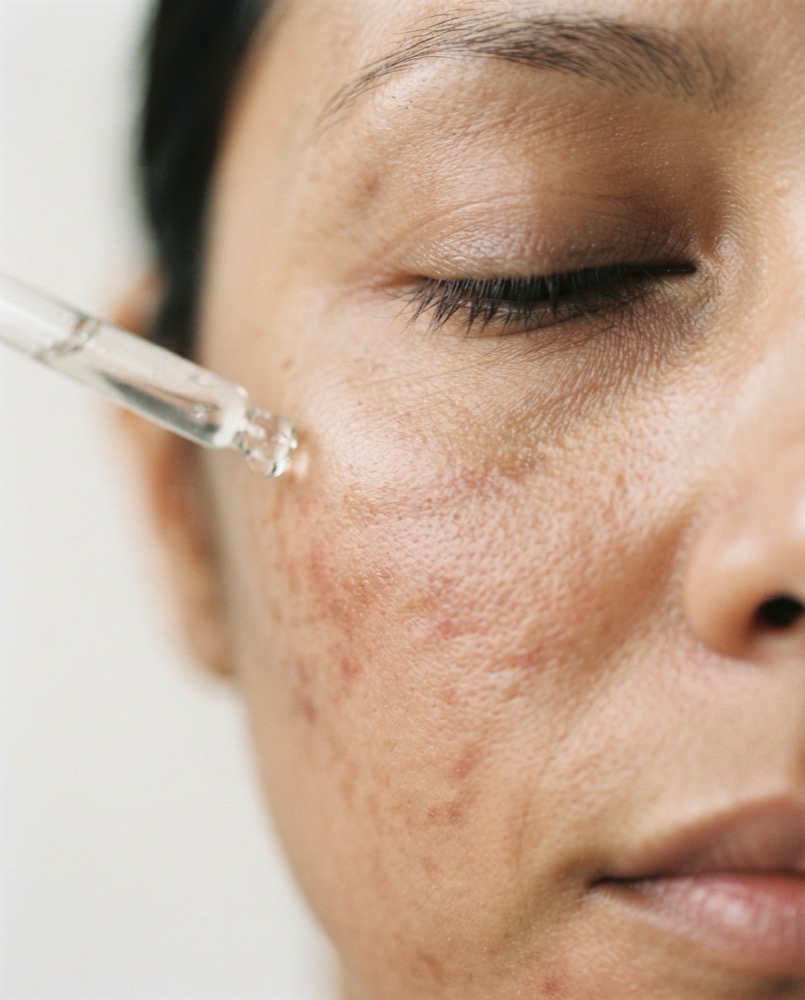
What is uneven skin tone?
Uneven skin tone describes a complexion that reads patchy rather than uniform – a mix of darker and lighter areas, lingering red or brown marks, blotchy cheeks, and a general loss of clarity.
It usually combines several things at once: hyperpigmentation from sun or inflammation, persistent redness, and surface build-up of dead cells that makes the whole face look mottled and dull.
What causes uneven skin tone?
Ultraviolet exposure is the dominant cause, stimulating melanin unevenly across the face. Post-inflammatory marks from acne, eczema or irritation add brown or red patches that can persist for months.
Hormonal pigmentation, slowed cell turnover with age, dehydration, pollution, smoking and a damaged barrier all compound it. Aggressive scrubbing or unsupervised strong actives frequently make tone more uneven, not less.
What ingredients are best for uneven skin tone?
Vitamin C and niacinamide are the reliable everyday choices – one protects and brightens, the other evens tone and strengthens the barrier. Azelaic acid is unusually useful because it addresses brown marks and redness at once.
Add gentle exfoliation with lactic or glycolic acid to clear surface build-up, retinol to accelerate turnover, and alpha arbutin or tranexamic acid for stubborn pigment. Daily broad-spectrum SPF is what makes the results stick. Take our Skin Quiz.