What is CoQ10 in skincare?
Coenzyme Q10, also called ubiquinone, is a fat-soluble compound found in the mitochondria of every cell. It has two jobs: it carries electrons in the process that generates cellular energy, and it acts as an antioxidant protecting cell membranes from oxidation.
Skin levels of CoQ10 fall steadily with age and are further depleted by UV exposure, which is the rationale for replacing it topically.
What skin concerns does CoQ10 treat?
It targets the energy side of skin ageing – tired, dull, thinning skin with reduced cell activity – alongside fine lines and loss of firmness.
Topical application has been shown to raise CoQ10 levels in the skin and increase its antioxidant capacity, and laboratory work links it to reduced UVB-induced wrinkle formation. It is well tolerated, including on sensitive skin.
What ingredients are best paired with CoQ10?
Stack it with other antioxidants for a wider defence: vitamin C, vitamin E, ferulic acid, resveratrol and green tea all cover different free-radical species.
It pairs safely with retinoids, peptides, niacinamide and hyaluronic acid, making it easy to slot into an existing anti-ageing routine. As with all antioxidants, it supports sunscreen rather than substituting for it. Take our Skin Quiz.
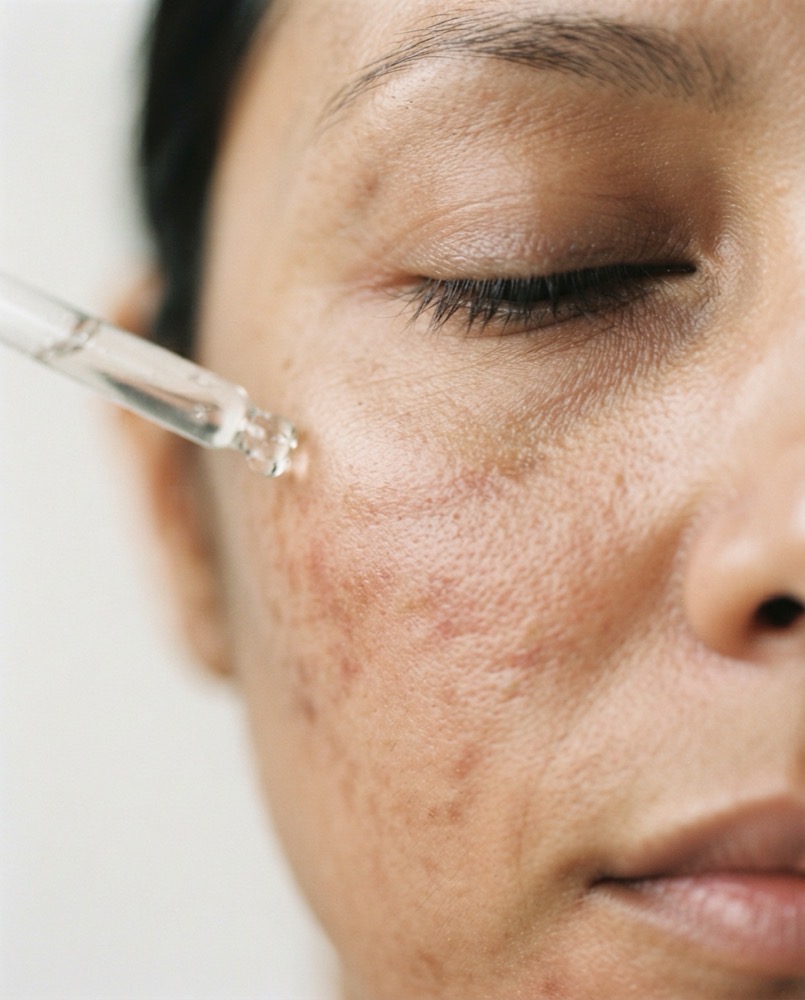
What is uneven skin tone?
Uneven skin tone describes a complexion that reads patchy rather than uniform – a mix of darker and lighter areas, lingering red or brown marks, blotchy cheeks, and a general loss of clarity.
It usually combines several things at once: hyperpigmentation from sun or inflammation, persistent redness, and surface build-up of dead cells that makes the whole face look mottled and dull.
What causes uneven skin tone?
Ultraviolet exposure is the dominant cause, stimulating melanin unevenly across the face. Post-inflammatory marks from acne, eczema or irritation add brown or red patches that can persist for months.
Hormonal pigmentation, slowed cell turnover with age, dehydration, pollution, smoking and a damaged barrier all compound it. Aggressive scrubbing or unsupervised strong actives frequently make tone more uneven, not less.
What ingredients are best for uneven skin tone?
Vitamin C and niacinamide are the reliable everyday choices – one protects and brightens, the other evens tone and strengthens the barrier. Azelaic acid is unusually useful because it addresses brown marks and redness at once.
Add gentle exfoliation with lactic or glycolic acid to clear surface build-up, retinol to accelerate turnover, and alpha arbutin or tranexamic acid for stubborn pigment. Daily broad-spectrum SPF is what makes the results stick. Take our Skin Quiz.