Why Your Milia Won't Pop: The Science of Keratin Cysts and How to Actually Clear Them
Updated on Jun 29, 2026 • 10 min read
The Mystery of the "Unpoppable" White Bump
Milia are those maddeningly stubborn little bumps that sit just beneath your skin — firm, round, and
completely unbothered by every squeeze, patch, or spot treatment you throw at them.
At 1–2 mm wide and appearing white to pale yellow, milia look deceptively like whiteheads. But they aren't.
The fundamental difference is this: acne is driven by sebum and bacteria, while milia are solid
keratin cysts with no opening to the surface.
That's why your current acne routine is failing them — you're treating the wrong problem entirely.
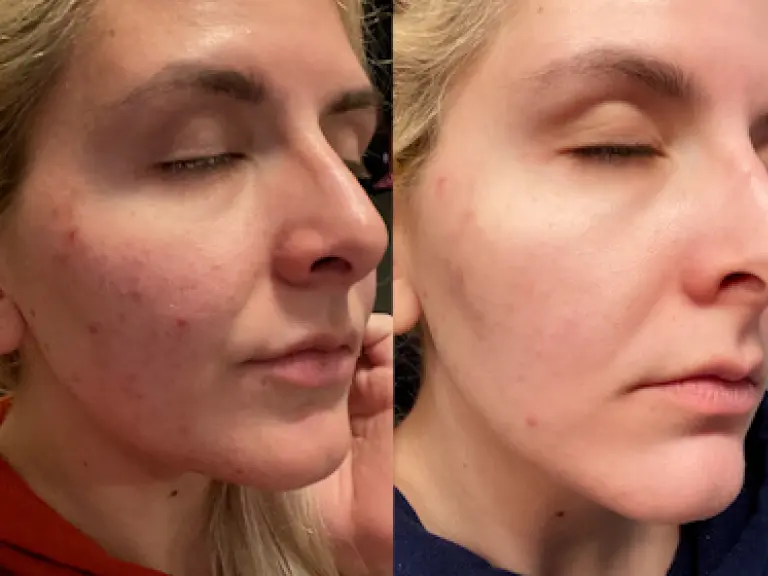
“I wake up and the milia bumps are finally flattening out. If you're looking to change up your
skincare routine and make it truly custom to your skin, I highly recommend YOUR Skin.”
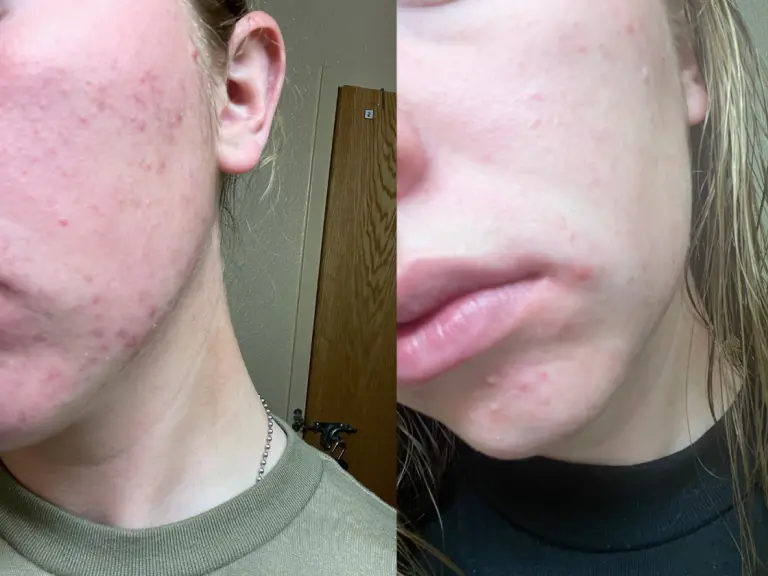
“I'm blown away by the progress! Milia bumps are frustrating to clear, but YOUR Skincare completely
changed the game. The bumps are gone and my complexion is incredibly smooth!”
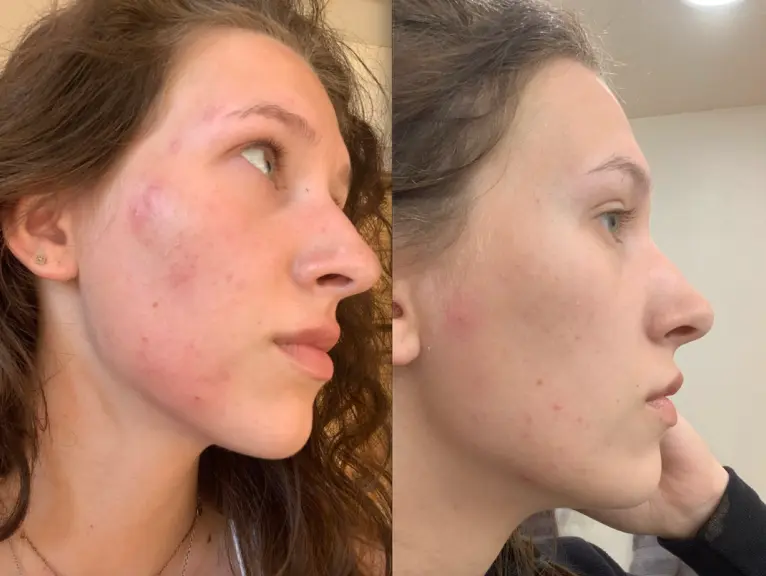
“I used to have hard, persistent milia bumps that nothing could clear. But now, they are completely
gone, my skin is so smooth, and my skin looks airbrushed instead of bumpy.”
You may have heard them called "milk spots," a name borrowed from how commonly they appear on newborns. In
adults, though, the nickname is more misleading than helpful — it implies something gentle and temporary when,
in reality, milia can persist for months or even years without the right approach.
According to dermatological sources, milia affect nearly 40% of adults at some point in their lives
—
making them far more common than most people realize, yet still widely misunderstood.
Knowing how to get rid of milia starts with understanding what they actually are at a structural level. And
that means looking at what's happening beneath the skin's surface — which is exactly where the science gets
interesting.
Why Milia Form: The Science of Trapped Keratin
Milia form when dead skin cells become sealed beneath an intact skin surface, creating a tiny cyst with no
natural exit point.
In dermatology, milia are classified as subepidermal keratin cysts — meaning the trapped material has nowhere
to go, no matter how hard you press.
Here's what's actually happening beneath the surface:
-
Keratin accumulates
as skin cells shed normally, but instead of reaching the surface and sloughing off, they become encapsulated
in a small pocket of skin.
-
No pore opening exists
to allow extraction. Unlike a blackhead or whitehead, milia are completely sealed — which is exactly why
squeezing accomplishes nothing productive.
-
Bacteria play zero role.
As confirmed by NIH research
via StatPearls,
milia are not caused by bacteria or sebum, which rules out acne-style treatments entirely.
| Feature |
Milia |
Acne |
| Cause |
Trapped keratin |
Bacteria + sebum |
| Pore opening |
None |
Present |
| Poppable? |
No |
Sometimes |
| Treatment |
Exfoliation/ extraction by pro |
Topical antibacterials |
Milia also split into two categories:
primary milia, which appear spontaneously, and
secondary milia,
triggered by skin trauma such as burns, laser procedures, or aggressive resurfacing.
Attempting to force a milium open creates fresh trauma — increasing inflammation and scarring risk, and
potentially triggering more secondary milia
in the process. Ingredients that accelerate
cell
turnover at the skin level
are a far safer path — which raises an important question about what's causing milia to form in the first
place.
Common Triggers: From Sun Damage to Heavy Creams
Milia don't form randomly — pecific lifestyle and environmental factors make certain skin types more
vulnerable, especially around the under-eye area.
UV exposure is one of the most underappreciated milia triggers.
Chronic sun damage toughens the skin's outer layers, creating a leathery surface that inhibits natural cell
shedding. When dead skin cells can't slough off normally, they become trapped beneath that thickened barrier.
Why the under-eye area is at risk for three compounding reasons:
-
Thin skin structure
— periorbital skin is among the thinnest on the face.
-
Occlusive product use
— heavy eye creams containing petrolatum, mineral oil, or silicones can trap dead skin cells.
-
Limited sun protection
— many people skip SPF directly under the eyes.
Heavy, occlusive creams deserve special attention here.
While they deliver intense moisture, they create a seal that dead skin cells can't escape.
Ingredients that actively promote
cell
turnover
are generally a smarter choice for milia-prone areas than thick barrier creams.
Understanding these triggers points toward a clear solution: a skincare routine built around gentle
exfoliation and non-occlusive formulas — or, for persistent cases, professional intervention.
Dermatology-Grade Treatments: What Actually Works
Professional removal remains the most direct path to clearing milia — but which method is right
depends entirely on your skin type and the severity of the cysts.
When it comes to milia treatments options, no at-home squeeze or extraction attempt will safely dislodge a
fully enclosed keratin cyst. Professional extraction is the most direct solution, while prevention via
retinols is the most sustainable long-term strategy.
Here are the four clinical options a dermatologist may recommend:
-
De-roofing and lancet extraction
— A sterile needle or lancet creates a micro-opening in the cyst wall, allowing the trapped keratin plug to
be gently expressed without tearing surrounding tissue.
-
Chemical peels
— Controlled application of acids like glycolic or salicylic acid dissolves the surface barrier trapping the
cyst, making it a strong option for widespread milia.
-
Cryotherapy
— Targeted freezing with liquid nitrogen breaks down the cyst structure with minimal surrounding tissue
disruption.
-
Topical retinoid prescriptions
— For stubborn cases, a dermatologist may prescribe tretinoin to
accelerate surface cell renewal
and prevent
new cysts from forming.
Pro Tip:
Any extraction or procedure must be performed in a sterile clinical environment. DIY attempts risk introducing
bacteria, causing post-inflammatory hyperpigmentation, or creating permanent scarring — damage that's far
harder to treat than the original milia.
Post-procedure, the skin's barrier is temporarily compromised — which makes your maintenance routine the
deciding factor between lasting clearance and rapid recurrence.
The Prevention Protocol: Retinols and Exfoliation
Preventing milia under the eyes and across the face comes down to one principle: keep dead skin cells moving
before they have the chance to become trapped.
"Because milia may result from dead skin getting trapped, to prevent milia it can be helpful to
incorporate retinols as well as to occasionally exfoliate." — Dr. Marisa Garshick, M.D., as quoted
in Prevention
Retinoids are the cornerstone of any routine for preventing milia.
By
accelerating skin cell turnover,
they reduce the buildup of keratin that feeds cyst formation in the first place. Consistent use over weeks —
not days — is what delivers results.
Exfoliation is equally important, but the approach matters. Harsh physical scrubs can
micro-tear skin, triggering inflammation that actually worsens milia formsation. Gentle chemical exfoliants —
think low-concentration AHAs or BHAs — clear debris at the surface level without disruption.
The biggest prevention mistake: using a "universal" product that wasn't formulated with your specific skin
profile in mind.
One-size-fits-all formulas often stack ingredients that are too occlusive or too aggressive for individual
skin types, creating the exact conditions milia thrives in.
Personalized ingredient selection — matching
actives to your skin's unique behavior — eliminates this guesswork entirely. That data-driven approach is what
distinguishes effective long-term prevention from the cycle of trial and error most people repeat for years.
Knowing the why behind every ingredient in your routine is, ultimately, the foundation of clear skin.
Stop treating your skin like a
test subject
Take the quiz and find out a 4-step regimen that actually works for you.
CLAIM 40% OFF FIRST MONTH
The Bottom Line: What You Need to Know
Milia milk spots are keratin cysts — and understanding that distinction changes everything about how you treat
them.
-
Milia are not acne.
According to the
National Institutes of
Health, milia forms when keratin becomes trapped beneath the skin surface rather than inside a hair
follicle. Squeezing accomplishes nothing — there's no opening for the contents to escape, and you'll only
risk scarring.
-
Professional extraction is the only safe removal method.
A dermatologist uses a sterile lancet to create a micro-opening. Any at-home attempt bypasses this precision
entirely.
-
Retinoids and sun protection are your prevention gold standard.
Consistent cell turnover
keeps keratin moving before it can compact and trap. Daily SPF prevents the photo-damage that thickens skin
and creates the conditions milia thrives in.
-
Trial-and-error skincare often makes things worse.
Layering heavy creams or rotating random actives without a clear strategy can disrupt the skin barrier and
trigger new milia formsation.
The real barrier to clearing milia isn't information — it's applying the right combination of ingredients
for your specific skin profile.
Generic routines miss that nuance entirely, which is exactly why personalized skincare isn't a luxury. It's
the next logical step.
Personalizing Your Path to Clearer Skin
Effective milia treatments isn't one-size-fits-all — and that's exactly why generic skincare routines so often
fall short.
The core problem:
every skin profile has a different balance point between exfoliation and hydration. Push too hard on cell
turnover without enough moisture, and you trigger the kind of barrier disruption that actually encourages
keratin buildup. Not enough exfoliation, and dead cells stall beneath the surface. Generic products can't
account for that nuance — they're built for an average that doesn't reflect your actual skin.
That's where data-driven skincare changes the equation. Y'OUR
® uses a proprietary skin quiz and algorithmic
analysis to map your individual skin profile — factoring in texture, sensitivity, lifestyle, and more — then
builds a non-toxic 4-step system calibrated to your specific needs. Ingredients like
retinol and cell-turnover actives
are only recommended when your profile supports them, avoiding the guesswork that leads to irritation
and stalled results.
Stop treating your skin like a test subject.
The trial-and-error approach costs time, money, and unnecessary frustration.
Take the Y'OUR® skin quiz
to move from guessing to a regimen that's built around your skin — backed by data, powered by non-toxic ingredients, and designed to actually work.