Black Girl Collagen Guide: The Best Skincare Peptides and Ingredients to Boost Collagen
in Melanin-Rich Skin
Updated on Jun 9, 2026 • 10 min read
Many people assume that melanin-rich skin doesn't need a targeted anti-aging skincare routine. While
it’s true that deeper complexions have natural structural
advantages, preserving skin elasticity and cellular bounce is an everyday essential. A common question
often arises in beauty forums: "Does
collagen skincare actually work on Black skin?"
The scientific answer is nuanced: while applying raw collagen topically won't change your skin
structure, using collagen-stimulating ingredients
absolutely works—but only if the formulation respects your skin chemistry. The real challenge with
anti-aging skincare for dark skin isn't a lack of efficacy;
it’s that generic, aggressive formulas frequently trigger micro-inflammation and dark spots. In this
guide, we’ll break down the science of how melanin-rich
skin ages, how topical peptides signal fresh collagen synthesis, and how to build a high-performance
routine that boosts firmness without risking
hyperpigmentation.
Stop risking surface irritation and dark spots with aggressive treatments
Take the quiz and find out a 4-step regimen that actually works for you.
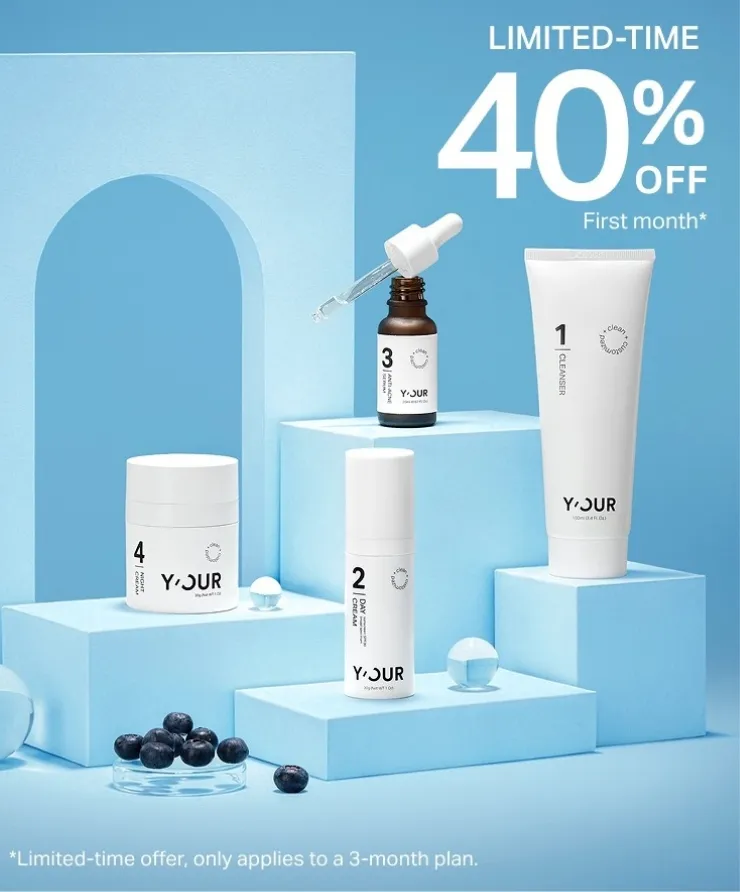
CLAIM 40% OFF FIRST MONTH
What Makes Melanin-Rich Skin Different—And Why Generic Skincare Advice Often Misses the Mark
Melanin-rich skin is often misunderstood in mainstream dermatology. Far from aging the
same way as lighter complexions, deeper skin tones possess a unique structural blueprint that
completely changes the rules of anti-aging. Because of this, generic skincare advice that focuses
heavily on aggressive surface peeling or harsh chemical resurfacing often causes significantly more
harm than good.
How Melanin Affects Skin Structure
The primary difference lies beneath the surface. Melanin-rich skin contains a higher concentration
of eumelanin (the pigment responsible for dark brown
and black tones), which provides inherent, natural photoprotection against UV damage. Additionally,
deeper skin tones possess an inherently denser dermis
with a highly compact collagen matrix. This robust structural density means that classic signs of
structural aging, such as fine lines, deep wrinkles,
and sagging, often appear much later in life compared to fair skin tones.
The Unique Challenges: Hyperpigmentation and Post-Inflammatory Response
However, this structural resilience comes with a distinct trade-off. While wrinkles may be delayed,
Black skin faces a primary aging concern: post-inflammatory hyperpigmentation (PIH)
and uneven skin tone.
The cells responsible for pigment production—melanocytes—are highly reactive.
When exposed to aggressive anti-aging ingredients, chemical peels, or micro-injury, these cells
trigger an inflammatory response. Instead of just stimulating collagen, the skin defends itself by
overproducing pigment, leaving behind stubborn, long-lasting dark spots.
Ditch the generic formulas that just sit on top or strip your moisture barrier. To effectively
target aging in melanin-rich skin, active ingredients must be chosen with extreme care to balance
deep collagen production with absolute cellular calm.
This is where a personalized skincare brand like Y'OUR® steps in,
translating your lifestyle data into a peptide ratio that delivers structural firmness without
overstimulating your melanocytes.
What Are Collagen Peptides—And Do They Work
Differently on Black Skin?
There is an abundance of anti-aging products on the market, but their efficacy depends entirely on
how they interact with your skin barrier.
A major misconception is that applying actual collagen to your face will replenish lost elasticity.
In reality, traditional, large-molecule collagen is too large to penetrate the skin's surface; it
simply sits on top acting as a temporary humectant.
This is where topical peptides change the game for melanin-rich skin. Instead of
trying to force a massive protein through the skin barrier, peptides deliver cellular-level
instructions to optimize your skin's natural biology.
Recognizing this molecular barrier, Y'OUR® Skincare intentionally
bypasses raw collagen entirely, opting instead for targeted, bio-available peptides that can
actually reach the deeper structural layers of melanin-rich skin without causing surface disruption.
How Topical Peptides Penetrate the Skin Barrier
Peptides are short chains of amino acids that serve as structural building blocks and cellular
messengers. Because of their significantly smaller molecular size, these low-molecular-weight
fragments can successfully penetrate the outer skin barrier.
Once absorbed, they mimic the natural cellular debris of broken-down collagen. This tricks your
dermal fibroblasts into action, signaling them to synthesize fresh, new collagen and elastin fibers
from within.
Why the Collagen Matrix Still Benefits from Peptide Signaling
Even though the collagen matrix in melanin-rich skin is naturally dense and compact, it is not
immune to damage. Over time, environmental stressors like pollution, stress, and chronological aging
inevitably degrade these deep structural support systems.
Peptide signaling is an exceptionally effective anti-aging strategy for Black skin because it
bypasses the surface entirely. Stop relying on heavy surface creams that can't penetrate.
By delivering deep, cellular-level signaling, peptides boost structural firmness and elasticity from
within—all without triggering the surface inflammation, peeling, and subsequent hyperpigmentation
associated with harsh alpha-hydroxy acids (AHAs) or high-percentage retinoids.
How to Build a Collagen Skincare Routine for
Melanin-Rich Skin: Sequencing Actives Without PIH
Because deeper complexions possess highly reactive melanocytes, introducing firming products
requires a strategic, barrier-first methodology.
To prevent the micro-inflammation that leads to dark marks, you must prioritize cellular calm while
sequencing your active ingredients.
This is why data-driven brands like Y'OUR® Skincare advocate for a
personalized approach. It ensures potent, collagen-boosting actives are meticulously
calibrated to your skin’s exact sensitivity threshold, rather than being thrown into a generic,
one-size-fits-all regimen.
Why PIH is the #1 Concern with Collagen Actives
When attempting to optimize dermal density, many traditional anti-aging routines rely heavily on
aggressive cellular turnover via high-percentage retinols or intense chemical peels. In melanin-rich
skin, this rapid surface disruption overstimulates the skin's defense mechanisms.
The result? You trade a minor concern over skin laxity for severe, long-lasting post-inflammatory
hyperpigmentation (PIH). For dark skin tones, an effective collagen routine must stimulate
fibroblasts without destabilizing the epidermis.
Which Collagen-Stimulating Ingredients Have the Lowest PIH Risk
When curating a firming routine, look for bio-available ingredients that actively
stimulate the skin matrix while simultaneously mitigating inflammation and maintaining barrier
function:
-
Palmitoyl Tripeptides:
These bio-mimetic peptides safely penetrate the skin barrier to signal deep
collagen synthesis directly at the cellular level, entirely bypassing the
surface peeling, redness, and irritation associated with traditional retinoids.
-
Niacinamide (Vitamin B3):
A multi-functional powerhouse that works synergistically with peptides. It
boosts skin elasticity, regulates pigment production to prevent dark spots,
and strengthens the ceramide barrier.
-
Hyaluronic Acid:
A non-comedogenic humectant that draws moisture into the intercellular matrix,
keeping the dense dermal layers plump and resilient without adding heavy,
pore-clogging weight.
-
Ceramides:
Crucial lipid building blocks that repair and reinforce the protective skin
barrier, ensuring your skin remains strong enough to process active
ingredients without triggering an inflammatory response.
Conversely, avoid unbuffered, high-percentage alpha-hydroxy acids (AHAs) and heavy synthetic
fragrances, both of which frequently cause the sub-surface micro-inflammation that
drives hyperpigmentation.
Stop risking surface irritation and dark spots with aggressive treatments—true structural correction
happens when you stimulate fresh collagen deep within the dermis where your skin needs it most.
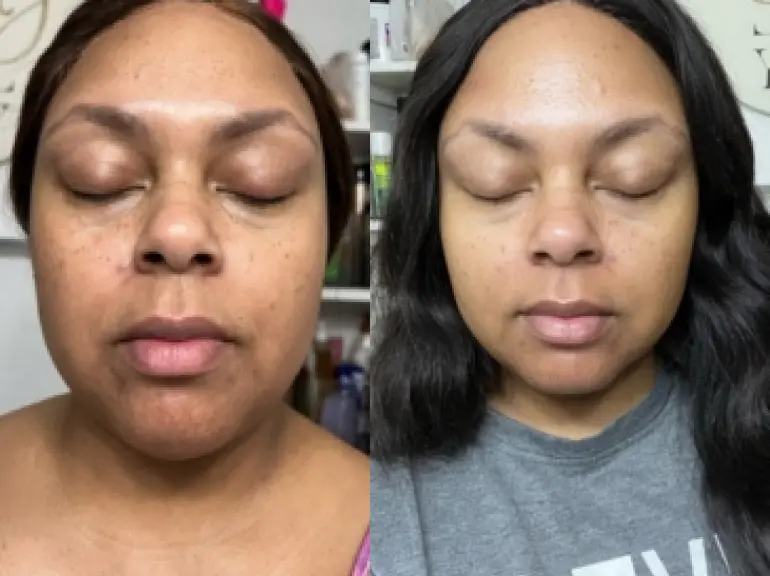
"My skin is a lot smoother. And most importantly, I noticed that my
laugh line is not as prominent. And my makeup doesn't break as fast
as it used to. I'm definitely happy about that."
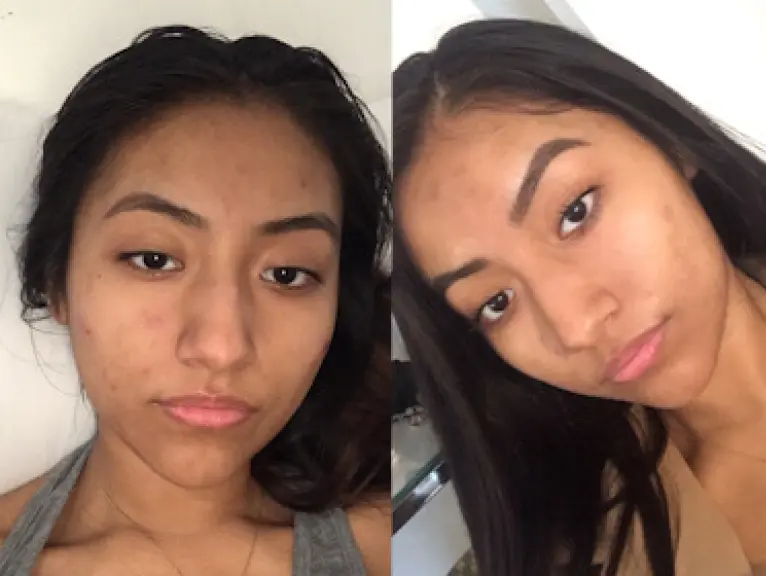
”It made a huge difference in my skin. My wrinkles are not as visible, my skin is smoother, and I think it helped prevent breakouts too. Besides, the formula didn’t feel stripping at all.”
“I feel like the ingredients in here really do target my dark spots and wrinkles. My skin brightens up and feels so balanced. Even the skin around my eyes looks tighter and virtually free of fine lines.”
Finding Your Perfect Match with Y'OUR® Skincare
The myth that one anti-aging routine fits all persists because many people use mass-market products
that aren't right for their specific skin chemistry. This is where Y'OUR® Skincare changes the game.
Our proprietary Skin AI algorithm identifies exactly what your skin needs by analyzing your
environment, lifestyle, and skin concerns. Instead of placing you into a generic skin type category,
we determine your specific PIH sensitivity, your hydration balance, and your exact peptide pairing.
At Y'OUR Skin, our AI identifies the precise textures and ingredients
that will work with your melanin-rich skin instead of against it. We create a personalized system
that delivers targeted collagen-boosting peptides alongside barrier-protecting ingredients, ensuring
you get the firm, glowing results you want without the hyperpigmentation you fear.
Melanin-rich skin has always deserved better than "works for
all skin types." Y'OUR® Skin starts where generic skincare
stops—with your skin. Take the 2-minute quiz to build a collagen routine formulated for exactly
you: your PIH sensitivity, your hydration needs, your collagen concerns. Clean ingredients.
USA-made. Vegan. Yours.
TAKE THE QUIZ