

What is rosehip oil in skincare?
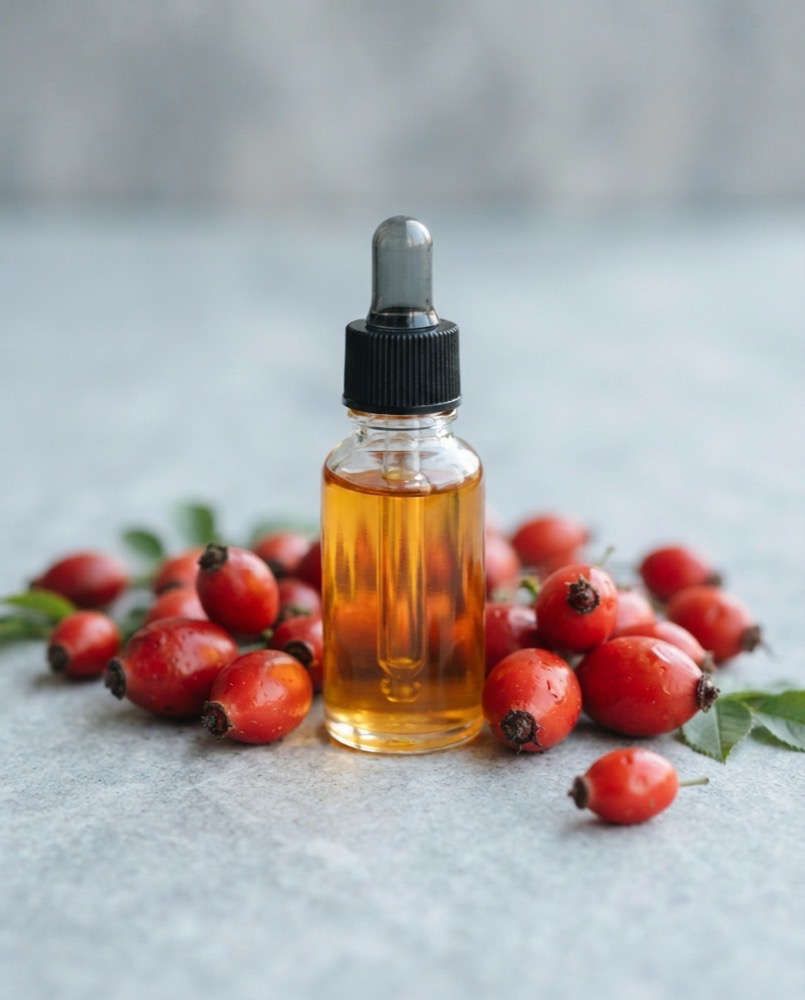
Rosehip oil is cold-pressed from the seeds and fruit of Rosa canina or Rosa rubiginosa – the hip left behind after a rose has flowered. It should not be confused with rose oil, which is distilled from petals and is a fragrance ingredient.
It is rich in linoleic and linolenic acid, vitamin E, and naturally occurring trans-retinoic acid in trace amounts. It has a light, dry feel and a faint earthy scent, and reviews of rosehip-based dermatological products document antioxidant, anti-inflammatory and regenerative activity.
What skin concerns does rosehip oil treat?
It suits dry, dehydrated and mature skin, and its essential fatty acids help calm eczema and general irritation. The vitamin A compounds give it a mild resurfacing effect on tone and texture without retinoid-level irritation.
Its best-documented use is repair: experimental work shows rosehip oil promotes excisional wound healing, which underpins its popularity for scars, stretch marks and post-acne marks.
What ingredients are best paired with rosehip oil?
Layer it over hyaluronic acid or a hydrating serum, and alongside ceramides and squalane for a complete barrier routine. It pairs well with vitamin C for brightening.
Because it already contains vitamin A compounds, introduce it slowly if you are also using a retinoid. Its high linoleic content makes it a better choice for oily skin than most oils, but it oxidises quickly – buy small, opaque bottles and refrigerate. Take our Skin Quiz.
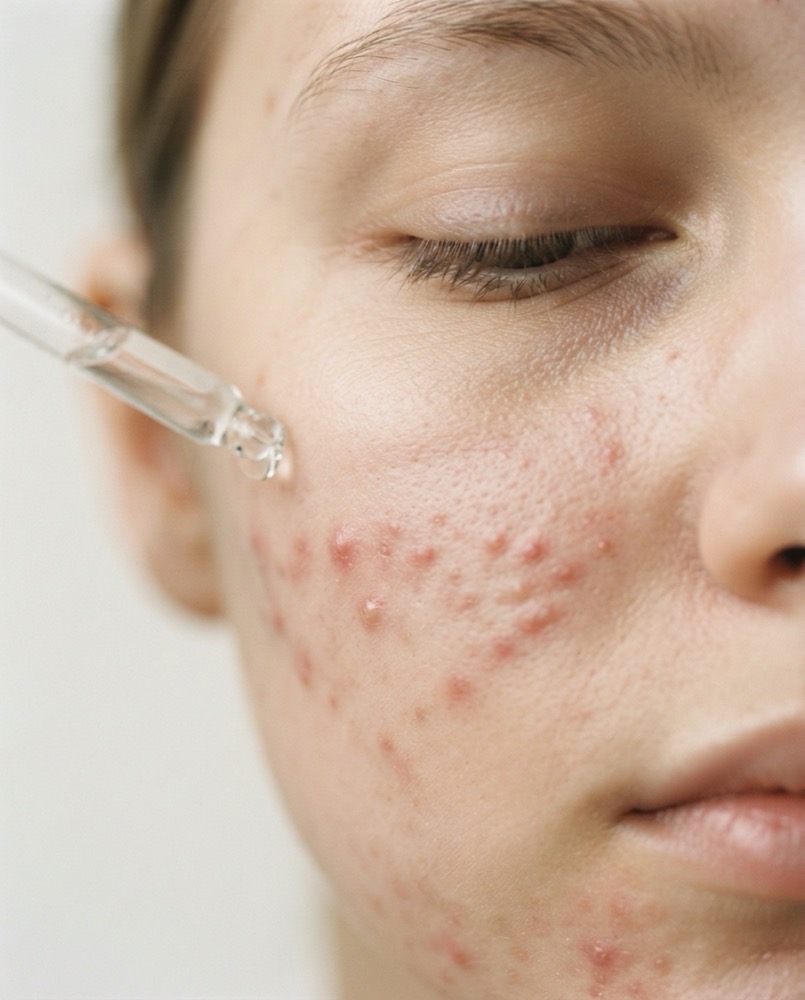
What is acne?
Acne vulgaris is a chronic inflammatory condition of the pilosebaceous unit – the hair follicle and its attached oil gland. It produces blackheads and whiteheads, inflamed papules and pustules, and in severe cases deep nodules and cysts.
It is the most common skin condition worldwide, and it is not a hygiene problem. Acne begins with a microcomedone forming invisibly inside the follicle, weeks before anything shows on the surface.
What causes acne?
Four mechanisms work together: excess sebum driven by androgens, abnormal shedding of cells inside the follicle, overgrowth of Cutibacterium acnes, and the inflammatory response that follows.
Genetics set the baseline. Hormonal fluctuation, stress, high-glycaemic diets, comedogenic products, friction from masks or helmets, and certain medications all push it further. Over-cleansing and picking make it visibly worse.
What ingredients are best for acne?
Salicylic acid clears inside the pore, benzoyl peroxide reduces bacterial load, and retinoids prevent the plug forming in the first place – that last one is the most valuable long-term.
Azelaic acid and niacinamide reduce inflammation and the marks left behind, and sulphur or clay help oily, congested skin. Keep the barrier intact with a gentle cleanser and a light non-comedogenic moisturiser; stripped skin produces more oil. Take our Skin Quiz.