What is rose water in skincare?
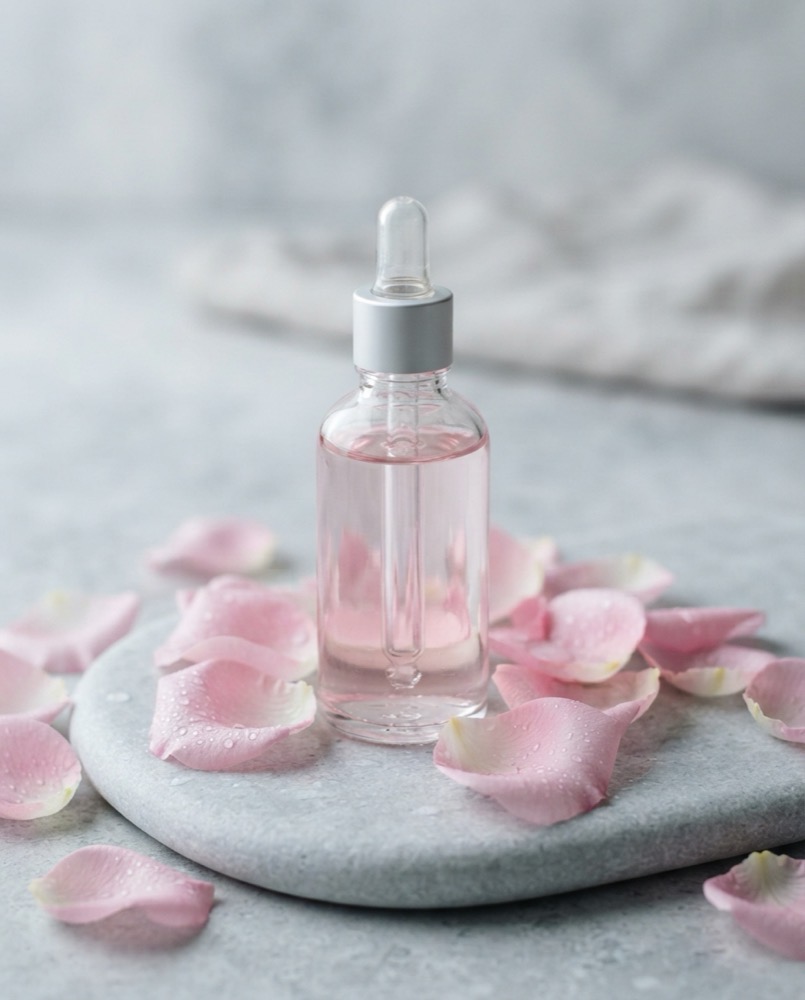
Rose water is the hydrosol left over when rose petals – usually Rosa damascena – are steam-distilled. It is the aromatic water that separates from rose essential oil, and it carries a small fraction of the plant’s water-soluble compounds.
The practice originated in Persia and rose water has been in cosmetic use for well over a thousand years. It should not be confused with rose oil, which is far more concentrated, or with fragranced rose-scented water, which contains no plant material at all.
What skin concerns does rose water treat?
It calms redness and irritation and gives a light, refreshing hydration, which suits sensitive, reactive and post-procedure skin. Extracts of Rosa damascena petal have documented skin anti-inflammatory activity, and its polyphenols contribute antioxidant defence.
It has mild antibacterial properties – a study of rose hydrosol found an effect on skin flora after hand-rubbing. Expect comfort and a pleasant sensory step rather than a measurable change in tone or texture.
What ingredients are best paired with rose water?
Use it as a hydrating base layer and follow with something that holds the water in – hyaluronic acid or glycerin, then ceramides or squalane. On its own it evaporates and leaves skin no better off.
It layers well with niacinamide, centella asiatica and aloe for calming routines. Check the label says rose hydrosol or distillate rather than water plus fragrance, and patch test, since a small number of people are allergic. Take our Skin Quiz.
What is rosacea?
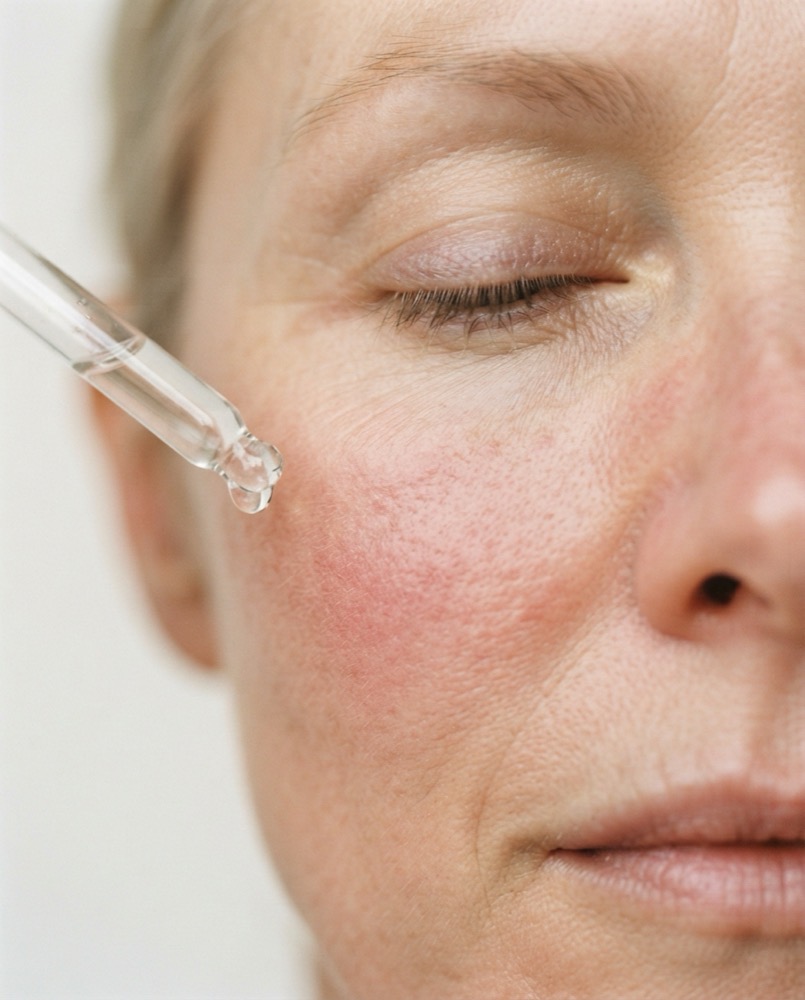
Rosacea is a chronic inflammatory skin condition that affects the central face – cheeks, nose, chin and forehead. It presents as persistent redness, visible broken capillaries, flushing that comes and goes, and in some subtypes acne-like papules and pustules.
Unlike acne, rosacea involves no comedones. It is driven by a combination of vascular hyper-reactivity, neurogenic inflammation and an overactive innate immune response, often with an impaired skin barrier alongside.
What causes rosacea?
There is no single cause. Genetic predisposition, an exaggerated immune response involving cathelicidin, overgrowth of Demodex mites, and dysfunction of the facial blood vessels all appear to contribute.
Flares are triggered by heat, sun exposure, alcohol, spicy food, hot drinks, exercise, stress, wind and cold, and by harsh skincare. Identifying and avoiding your own trigger set does as much as any product.
What ingredients are best for rosacea?
Azelaic acid and niacinamide are the standout actives – both reduce redness and inflammation without provoking the barrier. Sulphur, green tea extract, liquorice root and centella asiatica also calm reactive skin.
Build everything else around barrier repair: ceramides, glycerin, squalane and panthenol, with a gentle non-foaming cleanser and a mineral SPF every day. Avoid alcohol-heavy toners, fragrance, menthol, physical scrubs and high-strength acids. Take our Skin Quiz to build a routine your skin will tolerate.