What is rose water in skincare?
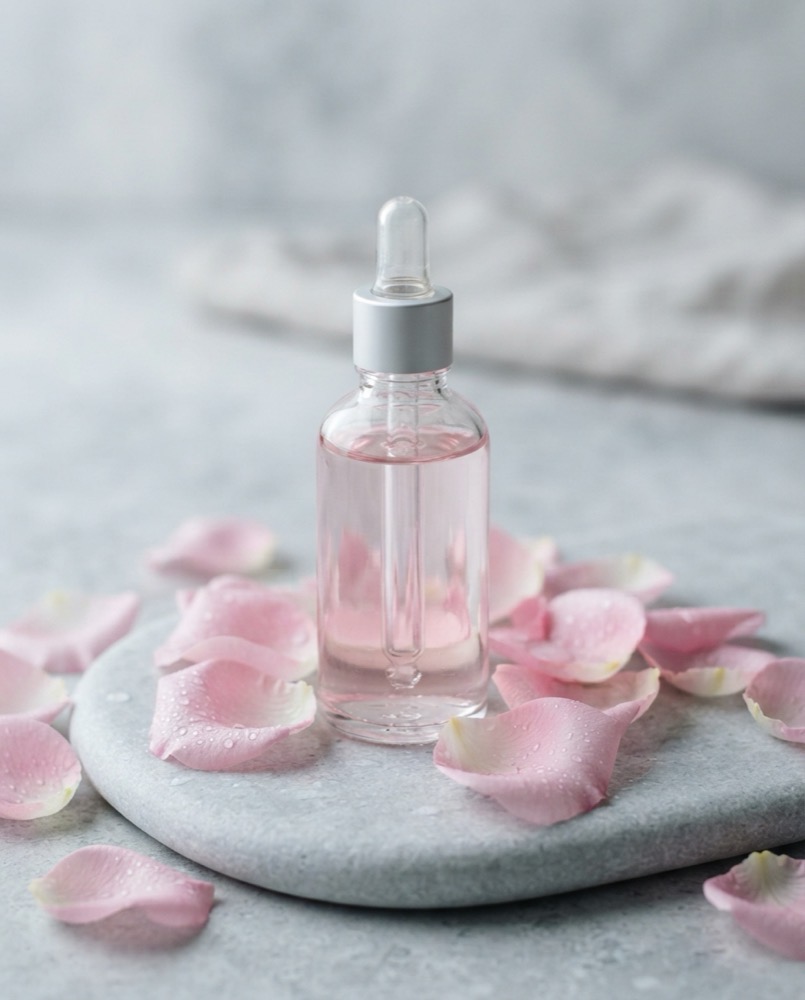
Rose water is the hydrosol left over when rose petals – usually Rosa damascena – are steam-distilled. It is the aromatic water that separates from rose essential oil, and it carries a small fraction of the plant’s water-soluble compounds.
The practice originated in Persia and rose water has been in cosmetic use for well over a thousand years. It should not be confused with rose oil, which is far more concentrated, or with fragranced rose-scented water, which contains no plant material at all.
What skin concerns does rose water treat?
It calms redness and irritation and gives a light, refreshing hydration, which suits sensitive, reactive and post-procedure skin. Extracts of Rosa damascena petal have documented skin anti-inflammatory activity, and its polyphenols contribute antioxidant defence.
It has mild antibacterial properties – a study of rose hydrosol found an effect on skin flora after hand-rubbing. Expect comfort and a pleasant sensory step rather than a measurable change in tone or texture.
What ingredients are best paired with rose water?
Use it as a hydrating base layer and follow with something that holds the water in – hyaluronic acid or glycerin, then ceramides or squalane. On its own it evaporates and leaves skin no better off.
It layers well with niacinamide, centella asiatica and aloe for calming routines. Check the label says rose hydrosol or distillate rather than water plus fragrance, and patch test, since a small number of people are allergic. Take our Skin Quiz.
What is adult acne?
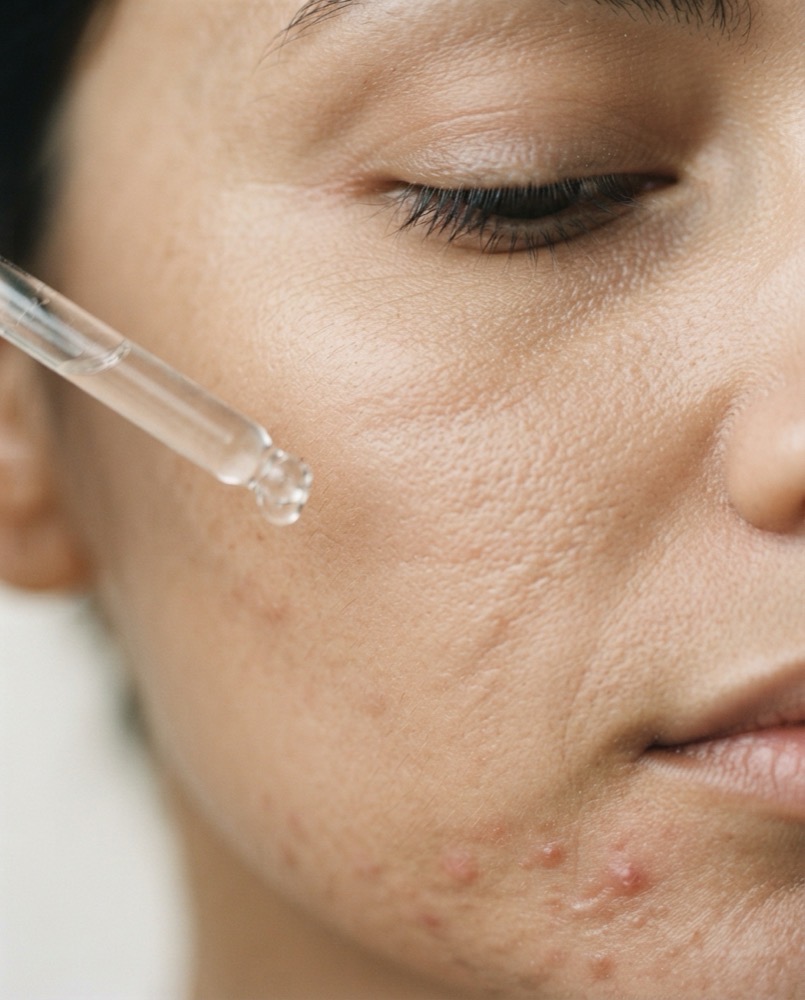
Adult acne is acne that persists past the teenage years or appears for the first time in your twenties, thirties or later. It affects a substantial share of adults, and disproportionately women.
It tends to look different from teenage acne: fewer widespread blackheads, more deep tender lesions along the jawline, chin and neck, often on skin that is simultaneously dry, sensitive or already showing early signs of ageing.
What causes adult acne?
Hormonal fluctuation is the leading driver – menstrual cycles, coming off or starting contraception, pregnancy, perimenopause and conditions such as PCOS all shift androgen activity and sebum output.
Stress and cortisol, sleep debt, high-glycaemic diets, comedogenic makeup and skincare, friction, and certain medications compound it. Adult skin also heals more slowly, so marks linger longer than they did at nineteen.
What ingredients are best for adult acne?
The challenge is treating acne without wrecking a barrier that is also ageing. Retinoids do double duty here, clearing follicles and stimulating collagen at the same time.
Azelaic acid is excellent for adult skin because it handles lesions, redness and post-acne marks together. Add salicylic acid used sparingly, niacinamide to regulate oil and calm inflammation, and ceramides plus hyaluronic acid to keep hydration up. Skip harsh benzoyl peroxide concentrations and scrubs. Take our Skin Quiz.