

What is orange in skincare?
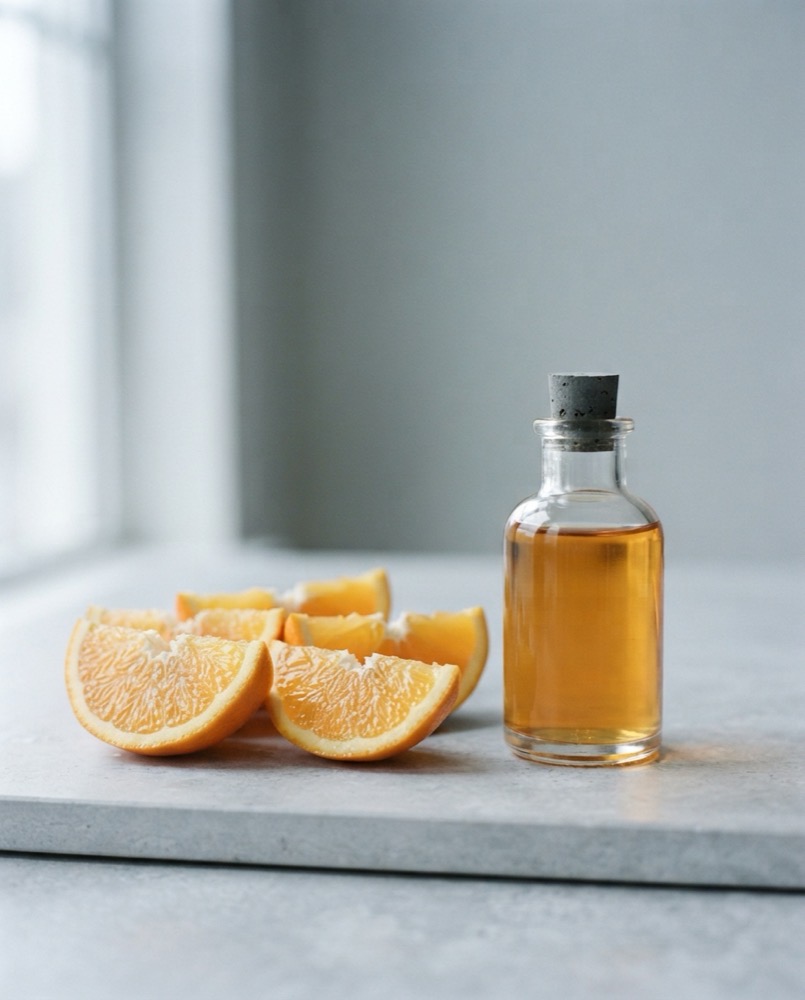
Orange reaches skincare in several forms: cold-pressed peel oil, sweet orange essential oil, fruit extract, and orange blossom water. They are not interchangeable – the peel oil is potent and fragrant, the extract mild, the hydrosol mostly water.
The fruit is a well-known source of vitamin C, and the peel contains limonene along with flavonoids such as hesperidin. The peel oil also contains furocoumarins, which matters for safety.
What skin concerns does orange treat?
Orange extracts contribute antioxidant activity and a mild brightening effect, and orange blossom water is a gentle, pleasant-smelling toner for normal skin. Sweet orange oil is used mainly for fragrance.
Two limitations are worth knowing. The vitamin C in fruit extract is nothing like a formulated vitamin C serum in concentration or stability. And cold-pressed citrus peel oil is phototoxic – blistering reactions to orange and sunlight are documented, so it does not belong in a daytime leave-on product.
What ingredients are best paired with orange?
If you want the fragrance and a light antioxidant contribution, look for orange extract or hydrosol in a rinse-off or night-time product, alongside glycerin, aloe and niacinamide.
For the brightening and antioxidant benefits people actually want, formulated vitamin C with vitamin E and ferulic acid does the job at a known strength with no phototoxicity. Avoid citrus essential oils entirely if your skin is sensitive or rosacea-prone. Take our Skin Quiz.
What is dullness?
Healthy skin reflects light evenly, which is what reads as bright and glowing. Dull skin does the opposite – it looks flat, ashy, grey or sallow, and makeup tends to sit on top of it rather than blend in.
Dullness is not a condition in itself but a visible symptom: a build-up of dead cells, dehydration and reduced microcirculation that together stop light bouncing cleanly off the skin’s surface.
What causes dull skin?
Dead skin cells that do not shed naturally accumulate on the surface and scatter light unevenly. Dehydration flattens those cells so they no longer sit plump against one another, and overly dry skin can damage the follicles and slow the production of collagen and sebum – all of which make the complexion look duller or ashier.
Lifestyle and environment do the rest. Sun exposure, pollution, smoking, alcohol, broken sleep and stress all accelerate free-radical damage, while cell turnover naturally slows with age, so skin loses the reflectivity it had in your twenties.
What ingredients are best for dullness?
Brightening dull skin comes down to three things: gentle exfoliation, consistent hydration and antioxidant protection. Vitamin C, alpha-hydroxy acids such as glycolic and lactic acid, salicylic acid, retinol and vitamin A, niacinamide, green tea extract, coenzyme Q10 and rosehip oil all help resurface, even out tone and defend against free radicals.
Hyaluronic acid and hydrolysed collagen plump the skin so it reflects more light, and daily broad-spectrum sunscreen prevents the UV damage that dulls the complexion in the first place. Take our Skin Quiz to find the exact combination your skin needs.