What is green tea in skincare?
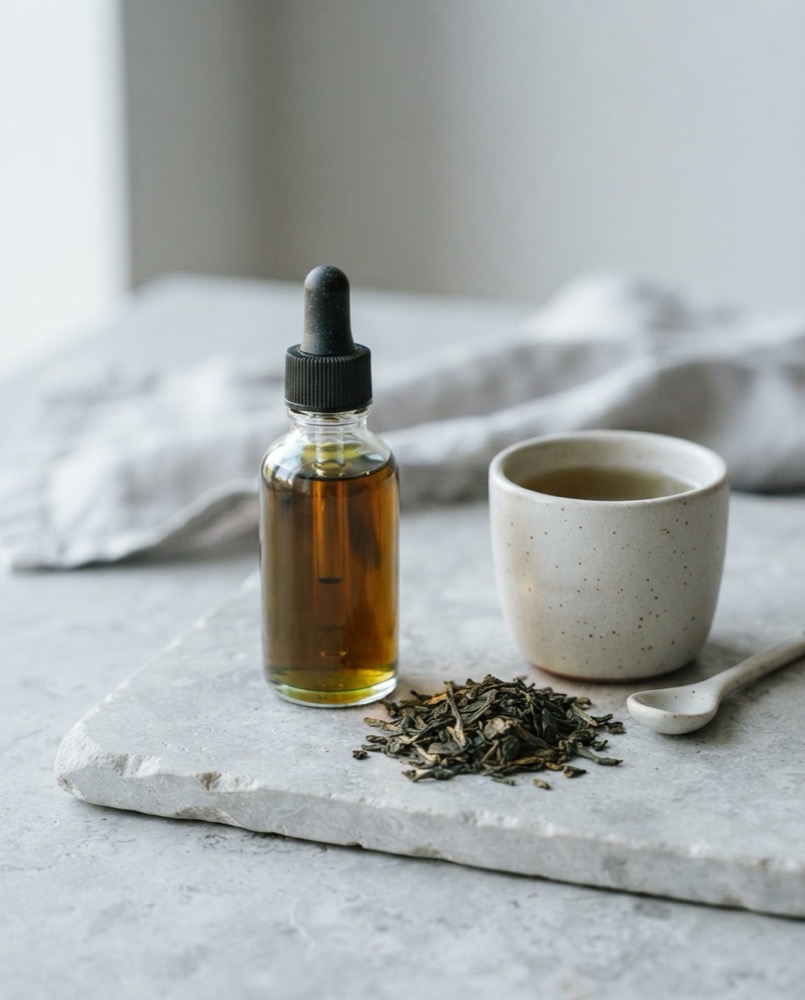
Green tea extract comes from the unfermented leaves of Camellia sinensis. Its activity is driven by polyphenols called catechins, the most abundant and most studied of which is epigallocatechin gallate, or EGCG.
On an ingredients list it appears as Camellia sinensis leaf extract. Because the catechins are potent antioxidants and anti-inflammatories, green tea has become one of the best-researched botanical actives in skincare.
What skin concerns does green tea treat?
It calms redness and irritation, making it useful for rosacea-prone, sensitive and post-procedure skin. Its antibacterial and sebum-regulating effects help mild acne and oily skin.
Topical application reduces UV-induced damage and inflammation, which positions green tea as a preventative anti-ageing ingredient alongside sunscreen rather than a replacement for it. It also supports skin under the eyes where puffiness is a concern.
What ingredients are best paired with green tea?
Layer it with other antioxidants – vitamin C, vitamin E, resveratrol, ferulic acid – for broader free-radical coverage in the morning.
For acne it works well with niacinamide and salicylic acid; for sensitivity, with centella asiatica, panthenol and ceramides. It is gentle enough to combine with almost anything, and is a good way to add antioxidant protection to a routine built around retinoids. Take our Skin Quiz.
What are dark spots?
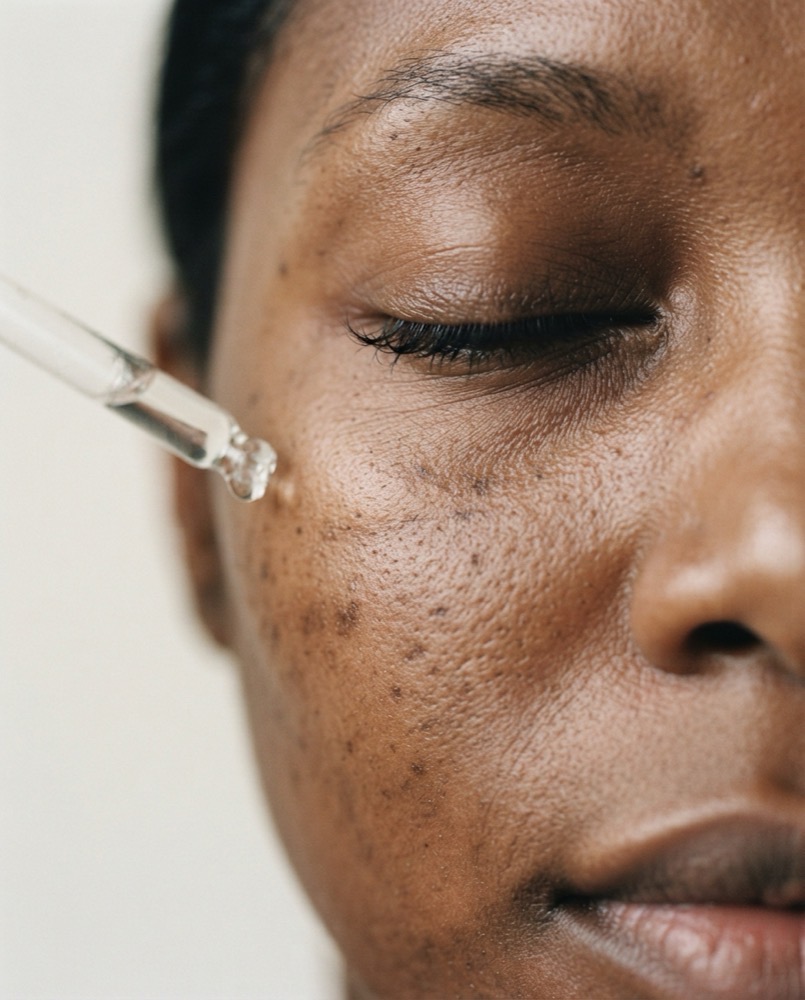
Dark spots are localised patches where the skin has produced more melanin than the surrounding area. The umbrella term covers sun spots, post-acne marks, melasma patches and freckles – different causes, same visible result.
They are flat rather than raised, vary from light tan to deep brown, and are most noticeable on the face, hands and chest. In deeper skin tones they tend to be darker and to last considerably longer.
What causes dark spots?
Two mechanisms dominate. Ultraviolet exposure triggers protective melanin production, and inflammation – from acne, ingrown hairs, eczema, friction, burns or harsh treatments – leaves post-inflammatory hyperpigmentation behind as it heals.
Hormonal change, some medications and heat add to it. Picking at spots is one of the most avoidable causes: the extra inflammation reliably makes the mark darker and longer-lived than the original blemish.
What ingredients are best for dark spots?
Vitamin C, niacinamide and azelaic acid are the everyday workhorses. For stubborn pigment, alpha arbutin, tranexamic acid, kojic acid and liquorice root extract interrupt melanin production directly.
Retinoids and gentle AHAs clear pigmented cells faster from the surface. Give any routine twelve weeks before judging it, and wear broad-spectrum SPF daily or the spots will simply redarken. Take our Skin Quiz.