

What is collagen in skincare?
Collagen is the structural protein that makes up roughly three-quarters of the skin’s dry weight. It forms the scaffolding in the dermis that keeps skin firm, thick and resilient, and production begins declining from the mid-twenties.
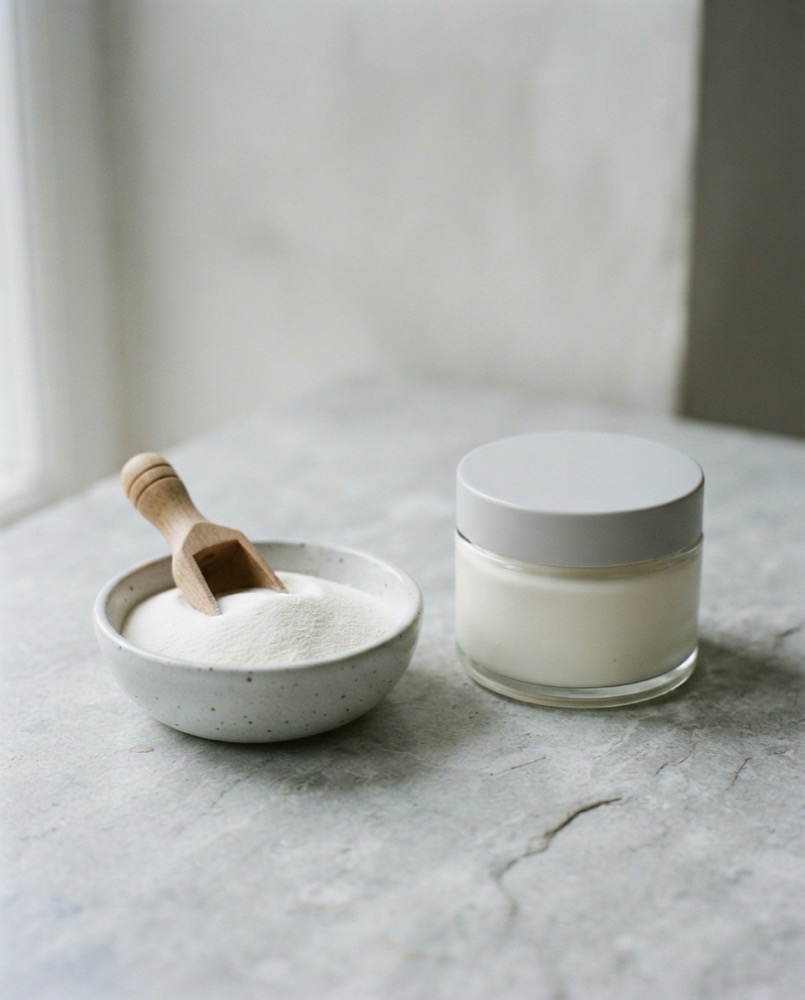
In products it appears either as hydrolysed collagen – broken into smaller peptides – or as an oral supplement. Whole collagen molecules are far too large to cross the skin barrier, so topical collagen works as a humectant and film-former rather than by replacing what you have lost.
What skin concerns does collagen treat?
Applied topically, hydrolysed collagen hydrates the surface and temporarily plumps fine lines, improving smoothness and how skin reflects light.
Taken orally the evidence is stronger: a systematic review and meta-analysis of randomised trials found hydrolysed collagen supplementation improved skin hydration and elasticity, with most studies running eight to twelve weeks.
What ingredients are best paired with collagen?
Vitamin C is the essential partner, because it is a required cofactor for the enzymes that cross-link collagen – without it, your body cannot build collagen regardless of intake.
Retinoids and peptides stimulate fibroblasts to produce more of their own, which does more for firmness than any collagen you apply. Hyaluronic acid, ceramides and daily SPF protect what is already there. Take our Skin Quiz.
What is melasma?
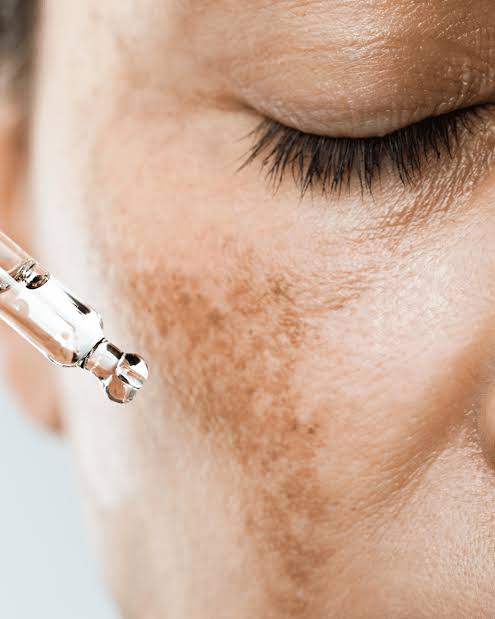
Melasma is a common form of acquired hyperpigmentation that appears as symmetrical brown or greyish-brown patches, most often across the cheeks, forehead, upper lip and jawline. It develops when melanocytes – the pigment-producing cells in the skin – become overactive and deposit excess melanin into the epidermis, the dermis, or both.
It is far more common in women and in medium to deeper skin tones, and it behaves as a chronic, relapsing condition rather than a one-off mark – which is why management matters as much as treatment.
What causes melasma?
Three triggers dominate: ultraviolet and visible light exposure, hormonal change (pregnancy, oral contraceptives and hormone therapy – hence its nickname, the mask of pregnancy), and genetic predisposition.
Heat, visible light from sunlight and screens, inflammation from harsh products or aggressive procedures, and certain medications all make existing patches worse. Because the triggers are ongoing, melasma typically fades and returns rather than clearing permanently.
What ingredients are best for melasma?
Daily broad-spectrum sunscreen is non-negotiable, and a tinted mineral SPF containing iron oxides is best because it also screens the visible light that drives pigment production.
On top of that, the most evidence-backed actives are tranexamic acid, azelaic acid, niacinamide, vitamin C, alpha arbutin, kojic acid, liquorice root extract, retinoids and gentle alpha-hydroxy acids. Avoid harsh scrubs and strong heat, both of which can rebound the pigment. Take our Skin Quiz to build a routine around your skin tone and triggers.