What is almond oil in skincare?
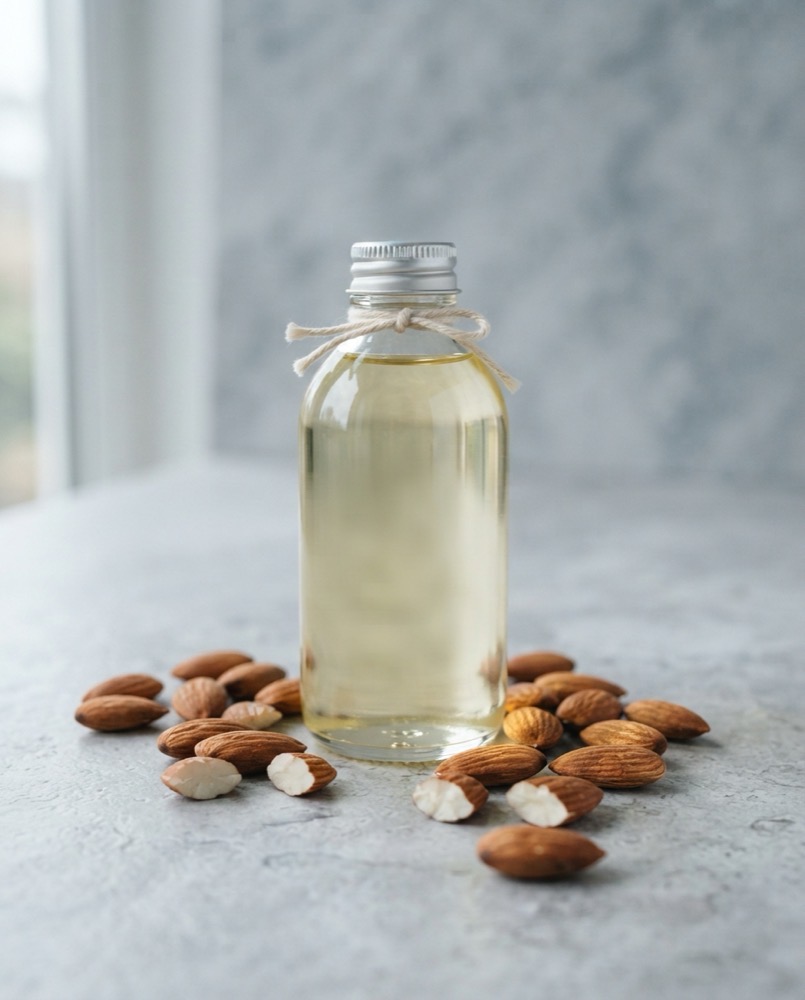
Sweet almond oil is cold-pressed from the kernels of Prunus dulcis. It is a light, pale oil made up largely of oleic and linoleic acid, with a useful concentration of vitamin E and phytosterols.
It absorbs more readily than heavier oils such as olive or castor, which is why it has long been used as a massage and body oil as well as a facial emollient.
What skin concerns does almond oil treat?
It softens dry, rough and flaky skin, and its linoleic acid and vitamin E content support the barrier and calm mild irritation – useful for eczema-prone skin and for chapped areas. Topical plant oils of this profile have documented anti-inflammatory and barrier-repair effects.
It is commonly used on stretch marks, under-eye dryness and cuticles. Anyone with a tree nut allergy should avoid it entirely, and everyone else should patch test, particularly if they have eczema.
What ingredients are best paired with almond oil?
Apply it over hyaluronic acid or glycerin on damp skin so it seals hydration in, and alongside ceramides for proper barrier repair.
It works well as a carrier for essential oils and as a gentle cleansing oil. It is mildly comedogenic, so very oily or acne-prone facial skin may do better with jojoba, squalane or grapeseed. Take our Skin Quiz.
What are dark spots?
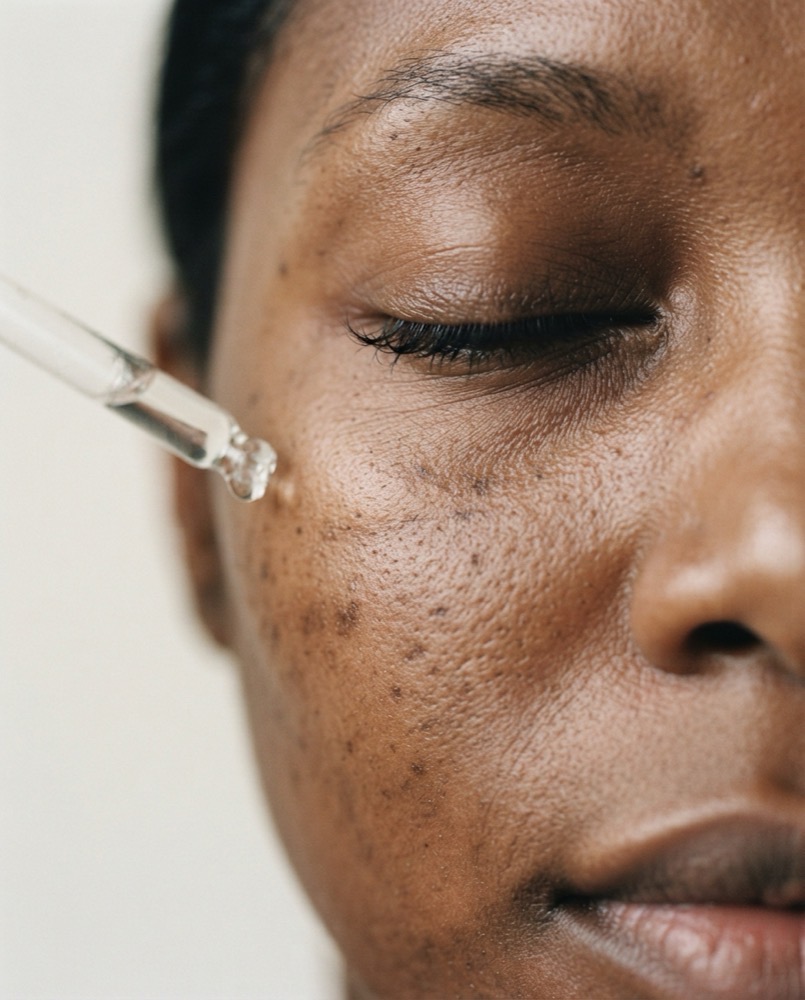
Dark spots are localised patches where the skin has produced more melanin than the surrounding area. The umbrella term covers sun spots, post-acne marks, melasma patches and freckles – different causes, same visible result.
They are flat rather than raised, vary from light tan to deep brown, and are most noticeable on the face, hands and chest. In deeper skin tones they tend to be darker and to last considerably longer.
What causes dark spots?
Two mechanisms dominate. Ultraviolet exposure triggers protective melanin production, and inflammation – from acne, ingrown hairs, eczema, friction, burns or harsh treatments – leaves post-inflammatory hyperpigmentation behind as it heals.
Hormonal change, some medications and heat add to it. Picking at spots is one of the most avoidable causes: the extra inflammation reliably makes the mark darker and longer-lived than the original blemish.
What ingredients are best for dark spots?
Vitamin C, niacinamide and azelaic acid are the everyday workhorses. For stubborn pigment, alpha arbutin, tranexamic acid, kojic acid and liquorice root extract interrupt melanin production directly.
Retinoids and gentle AHAs clear pigmented cells faster from the surface. Give any routine twelve weeks before judging it, and wear broad-spectrum SPF daily or the spots will simply redarken. Take our Skin Quiz.