What are adaptogens in skincare?
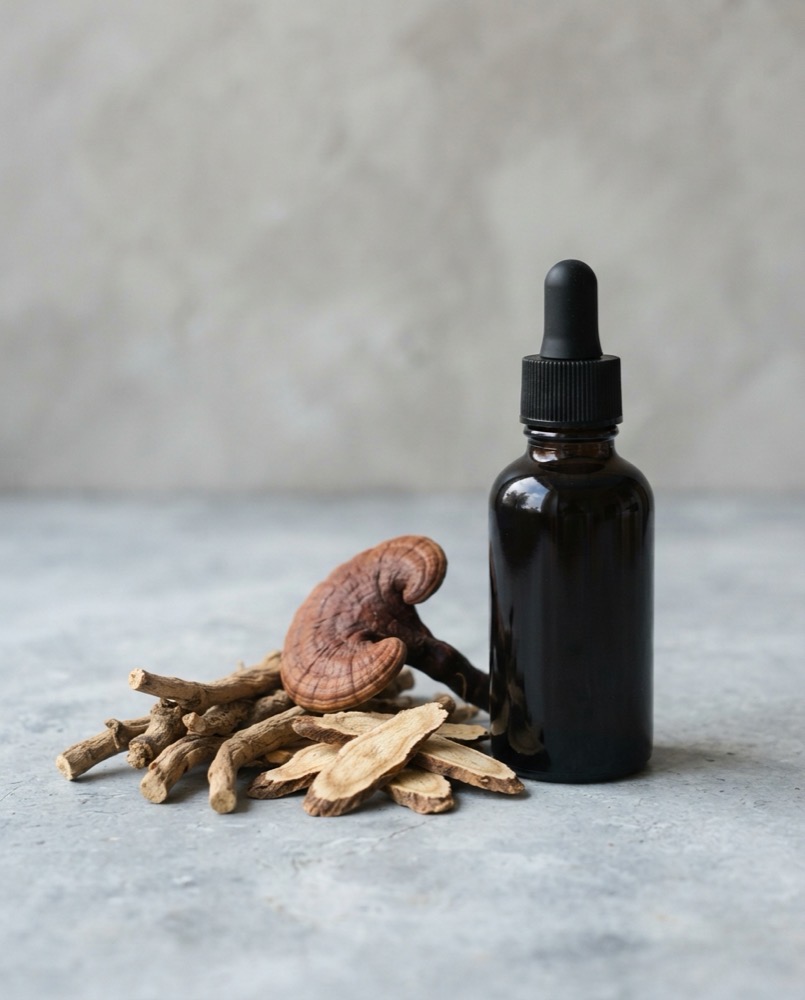
Adaptogens are plants traditionally used to help the body cope with stress – ashwagandha, ginseng, rhodiola, reishi and other medicinal mushrooms, holy basil, schisandra. The term comes from herbal medicine rather than dermatology.
The rationale for putting them in skincare rests on the link between stress and skin: cortisol drives inflammation, impairs the barrier and worsens acne, eczema and psoriasis. Reviews of adaptogen mechanisms describe effects on stress-response pathways at the cellular level.
What skin concerns do adaptogens treat?
Most adaptogens are also potent antioxidants and anti-inflammatories, which is where their topical benefit is clearest – calming redness, defending against free-radical damage, and supporting a barrier that stress has compromised.
The evidence is stronger for oral than topical use: randomised placebo-controlled work on ashwagandha shows measurable reductions in cortisol and stress. Applied to skin, treat them as a good antioxidant and soothing layer rather than a stress cure.
What ingredients are best paired with adaptogens?
They complement other antioxidants – vitamin C, vitamin E, niacinamide, green tea – and sit well alongside ceramides, hyaluronic acid and centella asiatica for barrier and calming work.
If stress is genuinely driving your skin, the routine is only part of the answer: sleep, exercise and the underlying stressor do more than any cream. Speak to a doctor before taking adaptogens orally, particularly with thyroid or autoimmune conditions or in pregnancy. Take our Skin Quiz.
What is adult acne?
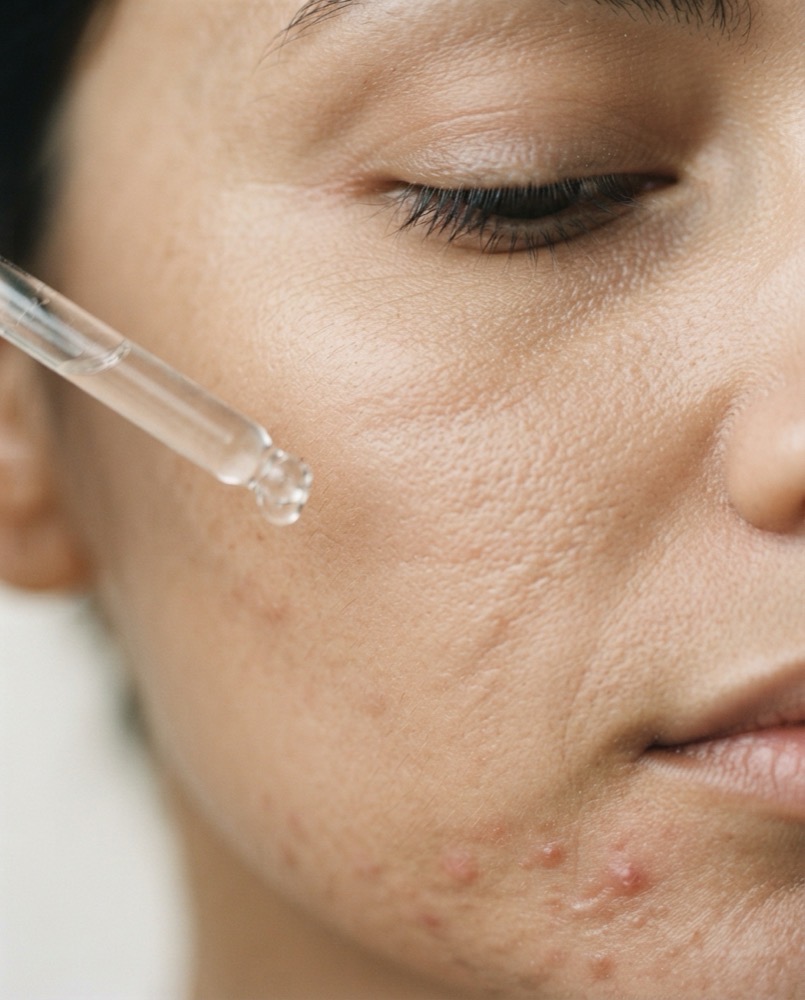
Adult acne is acne that persists past the teenage years or appears for the first time in your twenties, thirties or later. It affects a substantial share of adults, and disproportionately women.
It tends to look different from teenage acne: fewer widespread blackheads, more deep tender lesions along the jawline, chin and neck, often on skin that is simultaneously dry, sensitive or already showing early signs of ageing.
What causes adult acne?
Hormonal fluctuation is the leading driver – menstrual cycles, coming off or starting contraception, pregnancy, perimenopause and conditions such as PCOS all shift androgen activity and sebum output.
Stress and cortisol, sleep debt, high-glycaemic diets, comedogenic makeup and skincare, friction, and certain medications compound it. Adult skin also heals more slowly, so marks linger longer than they did at nineteen.
What ingredients are best for adult acne?
The challenge is treating acne without wrecking a barrier that is also ageing. Retinoids do double duty here, clearing follicles and stimulating collagen at the same time.
Azelaic acid is excellent for adult skin because it handles lesions, redness and post-acne marks together. Add salicylic acid used sparingly, niacinamide to regulate oil and calm inflammation, and ceramides plus hyaluronic acid to keep hydration up. Skip harsh benzoyl peroxide concentrations and scrubs. Take our Skin Quiz.